Address
304 North Cardinal St.
Dorchester Center, MA 02124
Work Hours
Monday to Friday: 7AM - 7PM
Weekend: 10AM - 5PM

Address
304 North Cardinal St.
Dorchester Center, MA 02124
Work Hours
Monday to Friday: 7AM - 7PM
Weekend: 10AM - 5PM

We’ve already covered the basics of Glycemic Index (GI) and Glycemic Load (GL) here,if you need a refresher, head back there. For now, just remember: GI tells you how quickly a food raises your blood sugar, and GL considers how much of it you’re actually eating.
Now, let’s zoom into the heart of North Indian kitchens ,parathas sizzling on the tawa, pavs soaking up curry, kachoris tempting you at street corners, and chhole bhature fueling Sunday brunches. Delicious? Absolutely. Blood sugar friendly? Hmm… let’s find out.
Because here’s the truth: what looks like comfort on your plate may be sending your glucose on a mini rollercoaster ride. Some dishes hit hard and fast, others take their time, and a few are surprisingly kind to your sugar levels. The secret lies in the grain, the cooking method, and the company it keeps (hello, dal and sabzi). So before you blame parathas or fear rajma chawal, let’s break down which North Indian staples are guilty of quick spikes, which are gentler, and how you can still enjoy them without guilt.
And yes, we’ll also bust a few myths along the way ,because no, not every fried snack is your enemy, and not every “healthy” roti is as innocent as it looks. Think of this as your street-food-meets-science guide to enjoying North Indian food without the sugar drama.
But here’s the delicious twist: how fast (or slow) things stabilize depends on what else is on your plate ,protein (paneer, chana, dal), fibre (salads, vegetables), and fats (ghee, oils) all team up to slow that spike. A paratha with curd? Gentler ride. Rajma with chawal? Smoother than you think. Even squeezing a wedge of lemon or adding pickles on the side can nudge digestion and balance the hit. Basically, your thali acts like a “traffic controller” for your sugar levels ,smart combos mean fewer sugar rollercoasters. And remember, portion size is like the hidden boss level ,two bhature will hit way harder than one. In short, it’s not about ditching your favourites, it’s about playing the balancing game like a foodie pro.
|
# |
Food (typical recipe) |
Approx GI (range) |
Typical GL (per usual serving) |
Notes / why |
|
1 |
Aloo Paratha (maida/white wheat + potato stuffing) |
60–75 (medium–high) |
GL: ~25–45 |
Potato + refined dough → higher GI; whole-wheat + less oil lowers GI. glycemicindex.com+1 |
|
2 |
Plain Paratha (whole-wheat, shallow-fried) |
55–65 (medium) |
GL: ~18–30 | Depends on fat used and thickness. Reformulation (higher fiber, resistant starch) lowers GI. PMC |
|
3 |
Pav (soft white bread roll) |
70–80 (high) |
GL: ~25–40 |
Made from refined wheat; acts like white bread. Sydney GI has many white breads in this band. glycemicindex.com |
|
4 |
Pav Bhaji (pav + veg mash) |
72–82 (high) |
GL: ~30–45 |
Veg mash reduces spike slightly vs plain pav, but the bread dominates GL. glycemicindex.com |
|
5 |
Chole (plain chickpea curry) |
30–45 (low–medium) |
GL: ~10–20 |
Legumes are low GI due to fiber & protein ,a good stabilizer. january.ai |
|
6 |
Chole-Bhature (bhature = deep-fried maida bread) |
Bhature: 75–90 (high); Chole: low |
GL: meal ~40–70 |
Bhature is the main problem ,deep-fried maida; chole helps but portions matter. glycemicindex.com+1 |
|
7 |
Samosa (potato/pea, maida shell, deep-fried) |
60–80 (medium–high to high) |
GL: ~20–40 |
Potato filling + refined shell + frying raises GI/GL; lentil/veg filling lowers it. january.ai+1 |
|
8 |
Kachori (maida shell, lentil/pea filling, fried) |
60–85 (medium–high to high) |
GL: ~20–45 |
Recipe variant matters: dal filling can reduce GI vs potato filling. glycemicindex.com |
|
9 |
Bajra (pearl millet) roti / bhakri |
50–65 (low–medium) |
GL: ~12–25 |
Millets generally lower GI than refined wheat; good alternative. glycemicindex.com |
|
10 |
Jowar (sorghum) roti |
50–60 (low–medium) |
GL: ~12–22 |
Whole grain rotis are gentler than refined flour breads. glycemicindex.com |
|
11 |
Makki di Roti (cornmeal roti) |
60–70 (medium) |
GL: ~18–30 |
Coarser grains slow digestion; mixed with sarson (greens) adds fiber. glycemicindex.com |
|
12 |
Phulka / Chapati (whole-wheat, dry) |
55–62 (medium) |
GL: ~12–22 |
Portion and grain type affect GI; whole wheat better than maida. glycemicindex.com |
|
13 |
Poori (deep-fried wheat) |
70–85 (high) |
GL: ~25–45 |
Deep frying increases caloric load and often increases GL effect (portion matters). glycemicindex.com |
|
14 |
Puri + Aloo (puri with potato) |
75–90 (high) |
GL: ~35–60 |
Potato side plus fried bread = heavy GL. glycemicindex.com |
|
15 |
Bhature (refined dough, fried) |
80–90 (high) |
GL: ~40–70 |
One of the highest common meal carbs due to refined flour + frying. glycemicindex.com |
|
16 |
Sooji / Rava Upma |
60–75 (medium–high) |
GL: ~20–35 |
Semolina digests faster than whole grains; add veggies and peanuts to lower GL. glycemicindex.com |
|
17 |
Poha (flattened rice, lightly cooked) |
65–75 (high) |
GL: ~18–30 |
Lightly processed rice flakes digest faster. Add peanuts/veg for fibre. glycemicindex.com |
|
18 |
Aloo Tikki (potato patty, shallow/deep fry) |
60–80 (medium–high) |
GL: ~20–40 |
Potato as main carb ,behaves like boiled potato (high GI) unless paired with protein/fibre. glycemicindex.com |
|
19 |
Sattu / Besan Chilla (gram-flour pancake) |
35–50 (low–medium) |
GL: ~8–18 |
Legume flours (besan) are lower GI and good for stable glucose. glycemicindex.com |
|
20 |
Rajma (kidney beans curry) |
30–40 (low) |
GL: ~6–15 |
Legumes again ,slow digestion, friendly for glucose control. PMC |
|
21 |
Dal (lentil curries) |
25–45 (low) |
GL: ~6–18 |
Steady, low GI ,pairing with refined breads increases meal GL. PMC |
|
22 |
Gur / Jaggery sweets (small portions) |
85–95 (very high) |
GL: ~20–60 (depends on portion) |
Concentrated sugar = very high GI. Portion control essential. glycemicindex.com |
|
23 |
Lassi (sweetened) |
65–80 (medium–high) |
GL: ~15–35 |
Sweetened drinks add sugar quickly; unsweetened or salted lassi much better. glycemicindex.com |
|
24 |
Makkhan (buttered paratha / high fat) |
60–80 (medium–high) |
GL: ~25–40 |
Fat blunts peak slightly but increases calories and long-term risk when excessive. glycemicindex.com |
|
25 |
Veg Biryani (rice + veg + oil) |
68–82 (high) |
GL: ~28–50 |
Rice type matters (parboiled/basmati vs short-grain), veg/protein moderates effect. glycemicindex.com |
Takeaway from the table: many street foods and fried breads are high GI/GL primarily because of refined flours, starchy fillings (potato) and deep-frying. Legume-based dishes and whole-grain rotis / millet rotis are among the more glucose-friendly options. glycemicindex.com+1
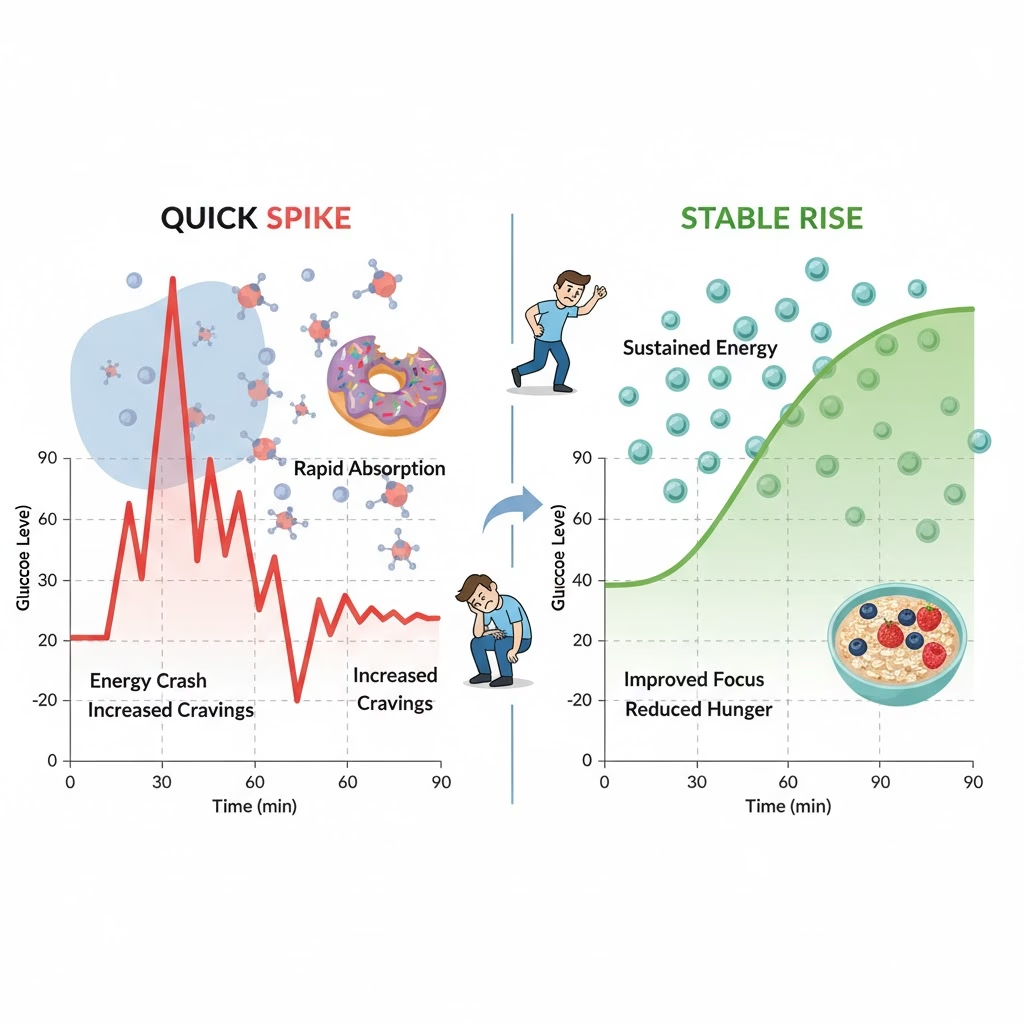
Watch portions: Even the healthiest bajra roti or brown rice can mess with your sugar if you overdo it. Five bajra rotis in one sitting? That’s like overdosing on “good carbs.” Moderation is the magic sauce here.
Myth 1: “All North Indian breads are bad.”
Not true. Bajra, jowar, and missi roti can be low-GI and quite friendly, giving you slow energy instead of sugar spikes.
Myth 2: “If GI is high, avoid it forever.”
No ,it’s about portion and pairing. A samosa occasionally, with salad and protein on the side, isn’t the end of the world.
Myth 3: “Chhole bhature is always terrible for sugar.”
It’s not the chhole that’s guilty ,it’s the fried bhature. Pairing the bhature with more fibre, protein, or switching to baked/whole-grain versions can make it much gentler.
Myth 4: “Sweet North Indian desserts are off-limits completely.”
Not exactly. Treats like gulab jamun or jalebi can fit occasionally if you adjust portions and balance the rest of the meal with protein and fibre.
FAQ 1: Does ghee lower GI?
Fat slows digestion a bit, but it won’t “cancel out” sugar spikes. Overdoing ghee adds calories more than it solves spikes.
FAQ 2: How fast does sugar return to normal?
Usually 2–3 hours, depending on your activity and insulin sensitivity. A walk after your paratha meal can make a big difference.
FAQ 3: Can mixing foods really make a difference?
Absolutely. Pairing carbs with legumes, proteins, or fibre-rich veggies slows absorption, flattens spikes, and keeps you fuller for longer.
FAQ 4: Does cooking method matter?
Yes! Tawa-cooked or lightly baked foods tend to have lower GI than deep-fried versions, and overcooking rice or poha can make carbs digest faster.
You don’t need to abandon parathas, chhole bhature, or jalebis altogether. The goal is to respect portion size, choose smarter variants, and balance your plate so your blood sugar doesn’t turn into a rollercoaster. Pair your breads with protein, fibre, and veggies, and enjoy your favourites without guilt. Culture, taste, and health can happily coexist ,with a little awareness and some smart swaps, you can have the best of all worlds.
North Indian foods are comfort, culture, and identity ,and with a few tweaks, they don’t have to be a blood sugar nightmare. The power is in your choices: whole grains over refined ones, balance over overload, and smart pairings that slow digestion. Think of it as eating smarter, not less ,a small tweak here, a clever side there, and suddenly your favourite thali becomes a sugar-friendly feast.
Want more region-specific food breakdowns and science-backed tweaks? Check out our previous articles on Glycemic Index, and stay tuned for upcoming deep dives into everyday meals. Better yet, personalize this knowledge with your dietitian so your plates are perfectly tuned to your lifestyle. Your taste buds stay happy, your energy stays steady, and your body thanks you quietly ,now that’s a win-win for every foodie!
Subscribe to get the latest posts sent to your email.
[…] Why? let’s be honest: who hasn’t polished off a plate of steaming idlis or crisp dosas without thinking twice? The catch is, what feels “light on the stomach” isn’t always light on your blood sugar. Some dishes spike your glucose like a rocket, while others behave more like a slow, steady train ride. If you’re interested, we’ve already published a post on GI & GL of North Indian Foods. […]