Address
304 North Cardinal St.
Dorchester Center, MA 02124
Work Hours
Monday to Friday: 7AM - 7PM
Weekend: 10AM - 5PM

Address
304 North Cardinal St.
Dorchester Center, MA 02124
Work Hours
Monday to Friday: 7AM - 7PM
Weekend: 10AM - 5PM
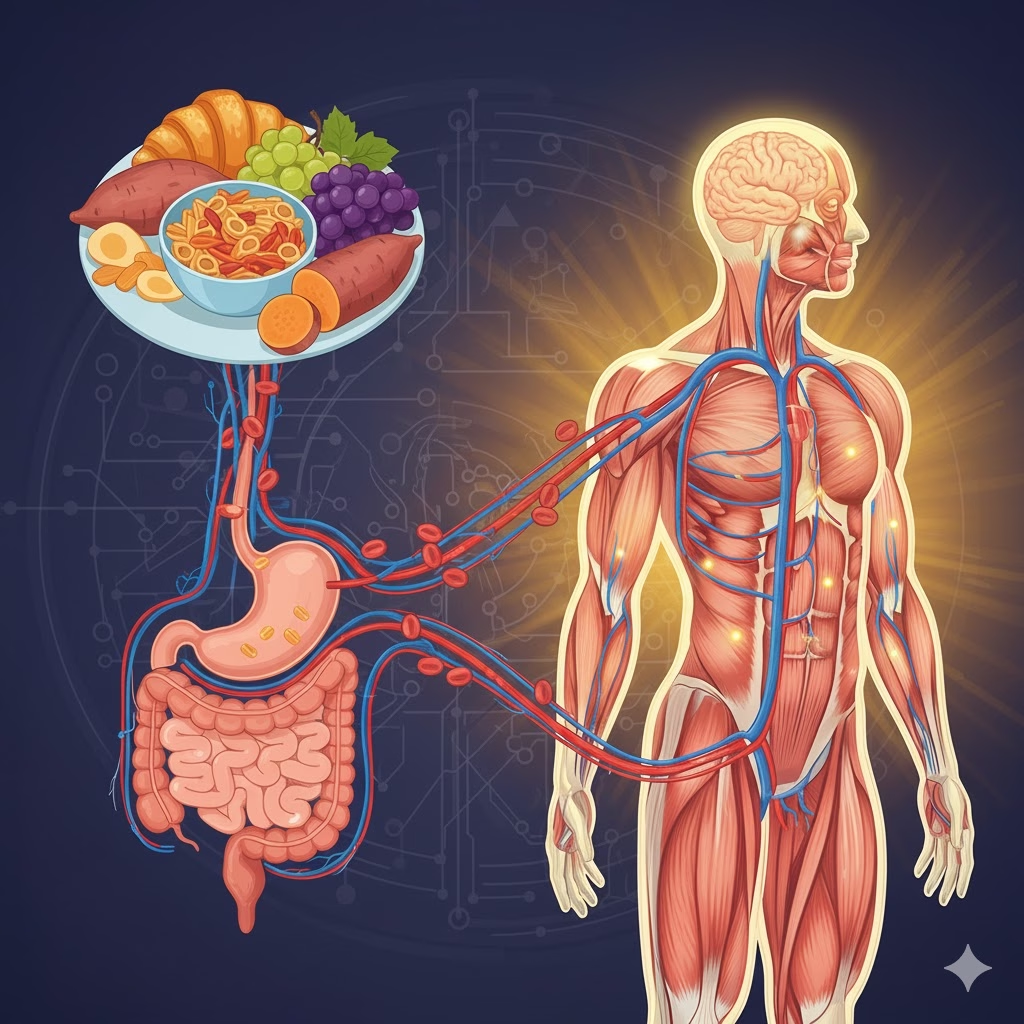
For decades, high glycemic index and glycemic load foods have been labeled as dietary villains. But is high GI/GL always bad? From white rice to watermelon, these “fast carbs” have been blamed for everything from weight gain to diabetes. But is this black-and-white thinking actually hurting us?
The truth is more nuanced. While chronically high GI/GL eating patterns can indeed pose health risks for certain populations, there are specific situations where these rapidly absorbed carbohydrates can be not just beneficial, but necessary for optimal performance and recovery.
Let’s dive deep into the science behind glycemic index and glycemic load, understand when they’re problematic, and discover the surprising scenarios where high GI foods might actually be your best friend.
Glycemic Index (GI) measures how quickly a carbohydrate-containing food raises blood glucose levels compared to a reference food (usually glucose or white bread). GI was originally designed for people with diabetes as a guide to food selection, but its application has expanded far beyond diabetes management.
The GI scale works as follows:
Glycemic Load (GL) takes the concept further by considering both the quality (GI) and quantity of carbohydrates in a typical serving. Advice to reduce intake of simple carbs and eat more complex carbohydrates was based on the assumption that consuming starchy foods would lead to smaller increases in blood glucose, but GL provides a more practical measure for real-world eating.
GL is calculated as: (GI × grams of carbohydrate per serving) ÷ 100
For example, watermelon has a high GI of 72, but because a typical serving contains only 6 grams of carbs, its GL is just 4—considered low.

Research consistently shows concerning links between high GI/GL diets and metabolic disorders. The updated analyses from our 3 cohorts and meta-analyses provide further evidence that higher dietary GI and GL are associated with increased risk of T2D.
The mechanism is straightforward: high GI foods cause rapid spikes in blood glucose, leading to:
High GI foods can sabotage weight management through several pathways:
Despite initial enthusiasm, the relationship between glycemic index (GI) and glycemic response (GR) and disease prevention remains unclear, but emerging evidence suggests connections to heart disease through inflammatory pathways and lipid metabolism disruption.
Knowing the GI and GL of your foods will help you avoid these risks, especially for people already diagnosed as diabetic or pre-diabetic. We’ve created a list of foods and their GI/GL values:
Diets with a low glycemic index (GI) and a low glycemic load (GL) can improve glycemic control, blood lipids, blood pressure and BMI in prediabetes and type 2 diabetes (T2DM). For these populations, high GI foods can:
People with minimal physical activity have limited glucose disposal capacity. High GI foods consumed without subsequent muscle activity can lead to:
The rapid glucose-insulin cycle created by high GI foods makes sustainable weight loss challenging through increased hunger and fat storage signals.
This is where high GI foods truly shine. The effect of the glycemic index (GI) of postexercise carbohydrate intake on muscle glycogen storage was investigated, and research consistently shows that high GI carbs are superior for rapid glycogen replenishment.
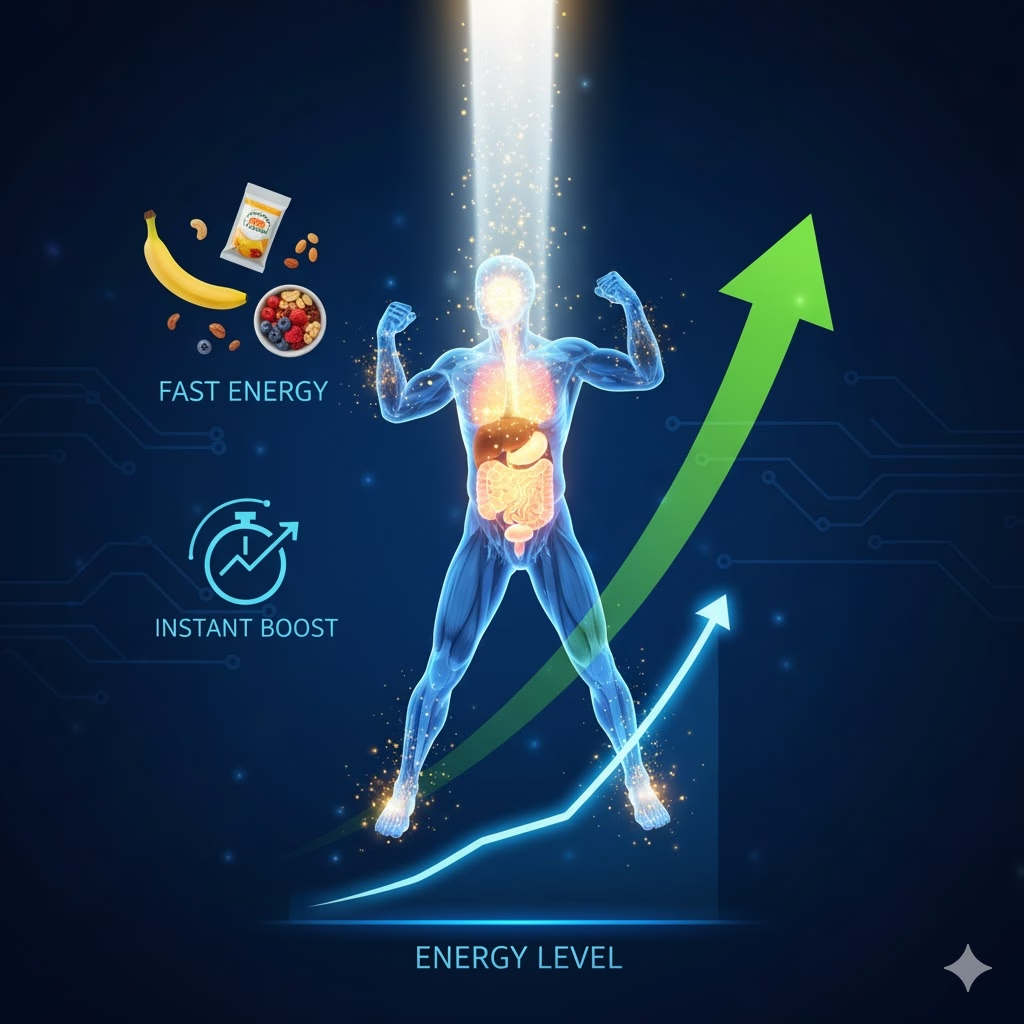
Why high GI works post-exercise:
Optimal post-workout high GI choices:
The aim of this study was to examine the effects of the consumption of foods of various glycemic index values on performance, β-endorphin levels and substrate (fat and carbohydrate) utilization during prolonged exercise.
High GI foods 30-60 minutes before intense exercise can:
For endurance athletes, high GI carbs during exercise are not just beneficial—they’re essential for:
People prone to low blood sugar episodes need rapid glucose sources. High GI foods provide:
When someone has Gastritis, the goal is:
After episodes of fever, infection, vomiting, or a course of antibiotics, the body enters a fragile recovery phase where digestion is often compromised and energy demands remain high. In such situations, high glycemic index (GI) and glycemic load (GL) foods can play a supportive role.
They provide quick, easily accessible energy without placing a heavy burden on the digestive system, helping to prevent fatigue and muscle breakdown when appetite is low. This becomes especially important during nausea or after vomiting, when gastric motility is unstable, the stomach lining is irritated, and digestive enzyme activity may be impaired.
In these conditions, simple, fast-digesting foods are not just easier to tolerate—they can actively aid recovery by delivering energy efficiently while allowing the gut to rest and heal.
Your activity level fundamentally changes how your body processes high GI foods:
Active individuals:
Sedentary individuals:
Not all high GI foods are created equal:
Better choices:
Avoid these high GI foods:
A: Generally, low GI foods support weight loss better due to improved satiety and stable blood sugar. However, if you’re active, strategic use of high GI foods around workouts won’t sabotage weight loss and may improve your exercise performance.
A: Given the high prevalence of diabetes and pre-diabetes worldwide and the consistency of the scientific evidence reviewed, the expert panel confirmed an urgent need to communicate information on GI and GL to the general public and health professionals. Most diabetics should limit high GI foods, but they may be appropriate for treating hypoglycemia or for very active diabetics under medical supervision.
A: The “glycogen window” is most open within 30-120 minutes post-exercise. Consuming high GI carbs with protein during this period maximizes recovery benefits.
A: High GI carbs can support muscle building by:
A: Not always. The concept of the glycaemic index (GI) was first introduced in the early 1980s as a method of functionally ranking carbohydrate foods based on their actual postprandial blood glucose response. Endurance athletes benefit from periodizing their carb intake—low GI for base training, high GI for intense sessions and recovery.
A: Consider these factors:
The availability of new data on the GIs of foods will facilitate wider research and application of the twin concepts of GI and GL. As research continues to evolve, one thing becomes clear: blanket statements about high GI foods being “bad” ignore the complexity of human metabolism and the importance of context.
High GI foods aren’t inherently evil, nor are they universally beneficial. Their impact depends entirely on:
For most sedentary individuals, especially those with metabolic dysfunction, low GI foods remain the safer choice for daily nutrition. But for active individuals, strategic use of high GI foods can enhance performance, accelerate recovery, and support training adaptations.
The key is understanding your own context and using this knowledge to make informed decisions rather than following rigid dietary rules. Your metabolism doesn’t read nutrition labels—it responds to the complex interplay of food, timing, activity, and individual physiology.
Remember: the best dietary approach is the one that supports your health goals, fits your lifestyle, and accounts for your individual needs and circumstances.
Subscribe to get the latest posts sent to your email.
[…] already covered the basics of Glycemic Index (GI) and Glycemic Load (GL) here,if you need a refresher, head back there. For now, just remember: GI tells you how quickly a […]
[…] Load (GL) are in previous posts, if you want a refresher, read this article where we explained what GI and GL are. But in short: GI tells us how fast a food raises blood sugar, and GL tells us how much impact it […]