Address
304 North Cardinal St.
Dorchester Center, MA 02124
Work Hours
Monday to Friday: 7AM - 7PM
Weekend: 10AM - 5PM

Address
304 North Cardinal St.
Dorchester Center, MA 02124
Work Hours
Monday to Friday: 7AM - 7PM
Weekend: 10AM - 5PM

Good vs bad carbs explained simply, with a glycemic index and load comparison table, Indian food examples, and smart swaps you can start today.
You genuinely love food, rice, roti, mithai, and every diet article you have read seems determined to make carbohydrates the enemy of that love. The truth is far less dramatic than the headlines suggest, and understanding good carbs vs bad carbs properly means you get to keep loving food while actually knowing which choices are working for you and which ones aren’t.

Carbohydrates are not one single thing, and lumping them all together, as if white bread and brown rice belong in the same conversation, is where most nutrition confusion starts. This guide breaks carbs down properly: what separates a “good” carb from a “bad” one, how glycemic index and glycemic load actually differ, which Indian staples fall where, and how to build a plate that keeps blood sugar steady without giving up the foods you genuinely enjoy.
Short on time? Skip to the practical summary near the bottom. It has everything you need to act on today without reading the full piece.
Carbohydrates are your body’s primary and most readily available energy source, broken down during digestion into glucose, which fuels everything from your brain to your muscles. Every carbohydrate you eat eventually becomes sugar in your bloodstream. The difference between a “good” and “bad” carb is not whether that happens, it always does, but how quickly it happens, how much fiber and nutrition travels alongside it, and how your body handles the resulting rise in blood sugar.

Simple carbohydrates are made of one or two sugar units and are digested quickly, producing a fast rise in blood sugar. Table sugar, honey, fruit juice and refined white flour products fall into this category. Complex carbohydrates are made of long chains of sugar units, which take longer to break down, producing a slower, steadier rise in blood sugar. Whole grains, legumes, vegetables and millets fall here.
The glycemic index (GI) ranks how quickly a food raises blood sugar on a scale, with foods scoring above 70 considered high GI, 56 to 69 considered medium, and 55 or below considered low, a classification convention used consistently across major diabetes and nutrition resources (Cleveland Clinic – Glycemic Index). Low-GI foods produce a gentler, more gradual blood sugar rise, which generally supports steadier energy and better long-term metabolic outcomes than frequent high-GI spikes.

Here is where most “good vs bad carbs” explainers stop short, and it is genuinely important. GI only tells you how fast a food raises blood sugar per gram of carbohydrate, not how much carbohydrate is actually in a typical serving. Glycemic load (GL) corrects for this by factoring in portion size, and it produces some genuinely counterintuitive results. Watermelon, for example, has a high GI score, but because a typical serving contains relatively little carbohydrate per gram of fruit (most of it is water), its glycemic load is actually low (Harvard Health Publishing – Glycemic Index and Glycemic Load for 100+ Foods). What this means for you is that judging a food purely by its GI number, without considering how much of it you would realistically eat in one sitting, can lead you to unnecessarily avoid perfectly reasonable foods.
Whole wheat, brown rice, bajra, jowar and ragi all digest more slowly than their refined counterparts, delivering fiber, B vitamins and minerals alongside their energy. India’s renewed push around millets, tied to their genuinely low glycemic index and high fiber content, has made them considerably more accessible and affordable than they were a decade ago, and rotating them into your weekly grain choices is one of the simplest upgrades available.

Dal, chana, rajma and other legumes are a rare combination of complex carbohydrate and protein in a single food, with fiber content that further slows digestion. This combination is a big part of why a bowl of dal keeps you full longer than an equivalent amount of white rice alone.
Most vegetables are naturally low glycemic load foods, high in fiber and water content relative to their carbohydrate density. Whole fruits, eaten with their fiber intact rather than juiced, behave very differently in your body than fruit juice, which strips out fiber and concentrates sugar.
White bread, white rice eaten in excess, biscuits, cakes and most packaged bakery items are stripped of the fiber and much of the micronutrient content their whole-grain versions carry, leaving behind mostly rapidly digested starch. This is why they tend to spike blood sugar quickly and leave you hungry again within an hour or two.

Packaged namkeen, instant noodles, sugary breakfast cereals and cold drinks combine refined carbohydrate with added sugar and, often, excess sodium, making them a concentrated source of exactly the carb-related problems this guide is describing.

| Food | Type | Approx. GI | Fiber | Verdict |
|---|---|---|---|---|
| Whole wheat roti | Complex | Medium (~62) | Yes | Good, everyday staple |
| White bread | Simple/refined | High (~75) | Minimal | Limit, occasional only |
| Brown rice | Complex | Medium (~68) | Yes | Good, regular rotation |
| White rice (large portion) | Complex, but high GI | High (~73) | Minimal | Moderate portion, pair with dal/veg |
| Chana dal | Complex | Low (~28) | Yes | Excellent, everyday |
| Watermelon | Simple, but low GL | High GI (~76), low GL | Some | Fine in normal servings |
| Cold drink/soda | Simple | High (~63-70) | None | Avoid regularly |
| Bajra/jowar roti | Complex | Low to medium | Yes | Excellent, rotate in often |
(GI values are approximate and vary by variety, ripeness and cooking method; cross-checked against Harvard Health’s glycemic index and load reference table.)
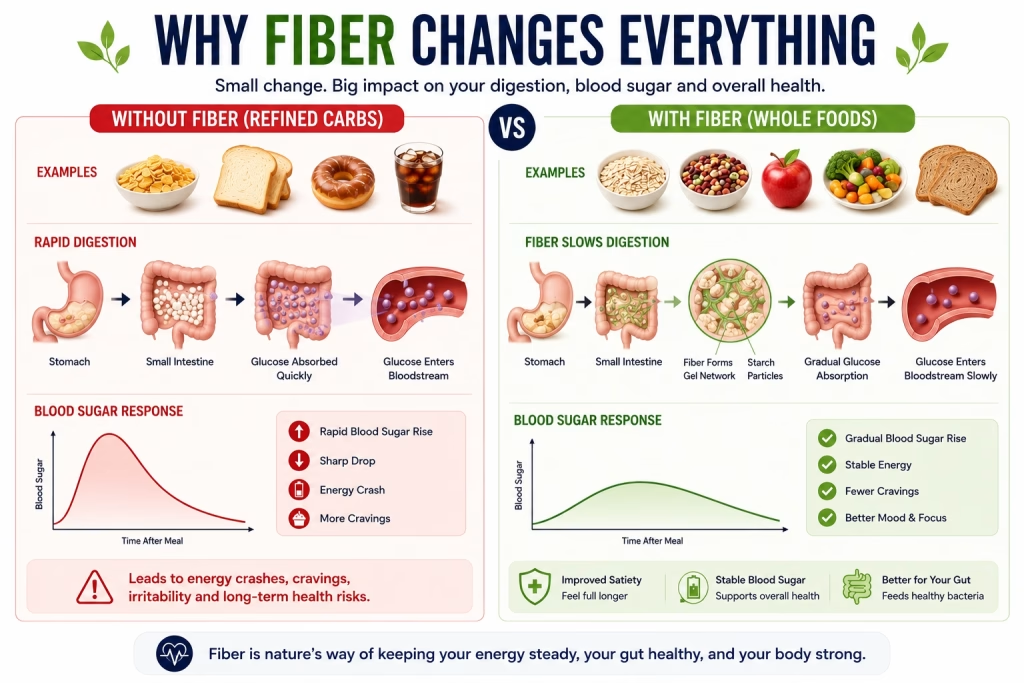
Fiber comes in two forms, and most whole-food carb sources contain a mix of both. Soluble fiber, found in oats, dal and fruits, dissolves in water and slows digestion, helping blunt blood sugar spikes. Insoluble fiber, found in whole grain bran and vegetable skins, adds bulk and supports regular digestion. Most adults benefit from roughly 25 to 30 grams of total fiber a day, a target most people, Indian or otherwise, consistently fall short of (Mayo Clinic – Dietary Fiber).
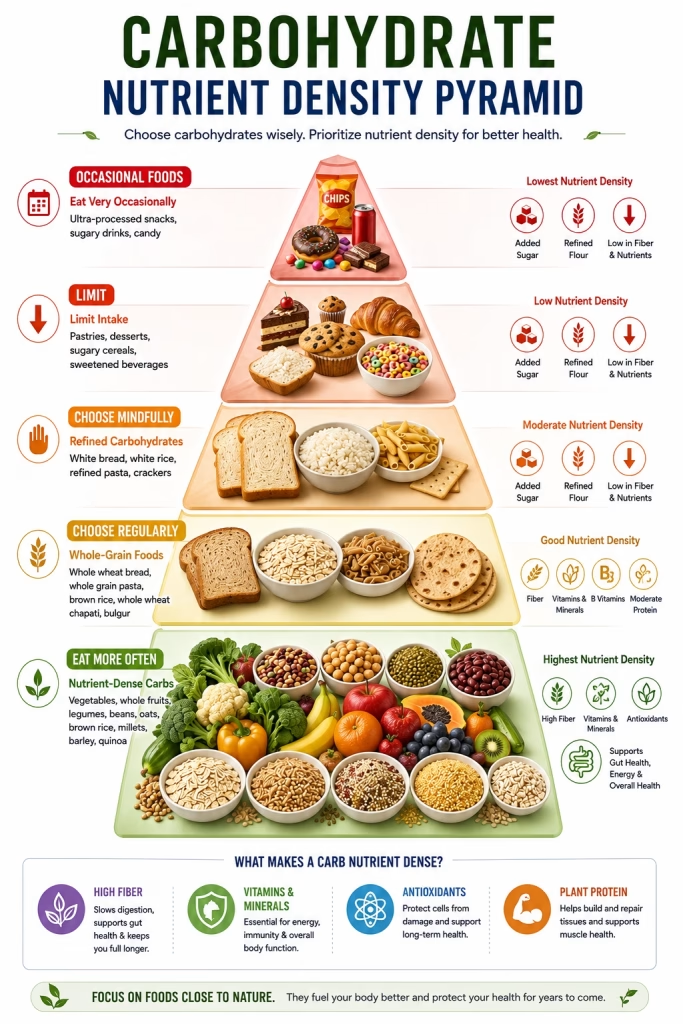
Whole, minimally processed carbohydrate sources carry B vitamins, iron, magnesium and other minerals alongside their energy content. Refining strips much of this away, which is why “empty calories” is a fair description of heavily refined carb sources, they provide energy with comparatively little else.

Complex carbs paired with fiber produce a slower, more gradual glucose rise, reducing the sharp spike-and-crash pattern associated with frequent high-GI, low-fiber eating.
Fiber and the slower digestion it causes both contribute to feeling fuller for longer on a similar calorie load, which is a meaningfully practical advantage if you are managing weight or trying to avoid mid-afternoon energy crashes.
A few practical swaps make a real difference without requiring you to give up familiar meals. Swap maida-based paratha for a mixed-millet paratha alongside dal and a fresh salad. Choose brown or red rice over polished white rice for at least some meals during the week, rather than treating it as an all-or-nothing switch. Pick whole fruit over fruit juice whenever possible, since juicing removes the fiber that would otherwise slow sugar absorption. Read ingredient lists rather than trusting front-of-pack claims. “Multigrain” bread, for instance, can still be made predominantly from refined flour with a small amount of other grains added for marketing purposes, so check whether whole wheat flour is actually the first ingredient listed.
Whole grains are one of the healthiest carbohydrate choices because they retain all three parts of the grain—the bran, germ, and endosperm. The bran provides dietary fiber, the germ contains healthy fats, vitamins, minerals, and antioxidants, while the endosperm supplies starch for energy. During refining, the bran and germ are removed, leaving mainly the starchy endosperm. As a result, whole grains generally contain more fiber, vitamins, minerals, and beneficial plant compounds than refined grains. Common examples include oats, brown rice, barley, quinoa, whole wheat, and millets such as ragi, jowar, and bajra.

Choosing whole grains regularly can support better overall health. Their higher fiber content slows digestion and carbohydrate absorption, helping promote steadier blood sugar levels, longer-lasting fullness, and improved digestive health. Large observational studies have also linked higher whole-grain intake with a lower risk of type 2 diabetes, cardiovascular disease, and premature death when consumed as part of an overall healthy dietary pattern. Whenever possible, replace refined grains like white rice, white bread, and refined flour products with minimally processed whole-grain alternatives to increase nutrient intake without giving up carbohydrates.

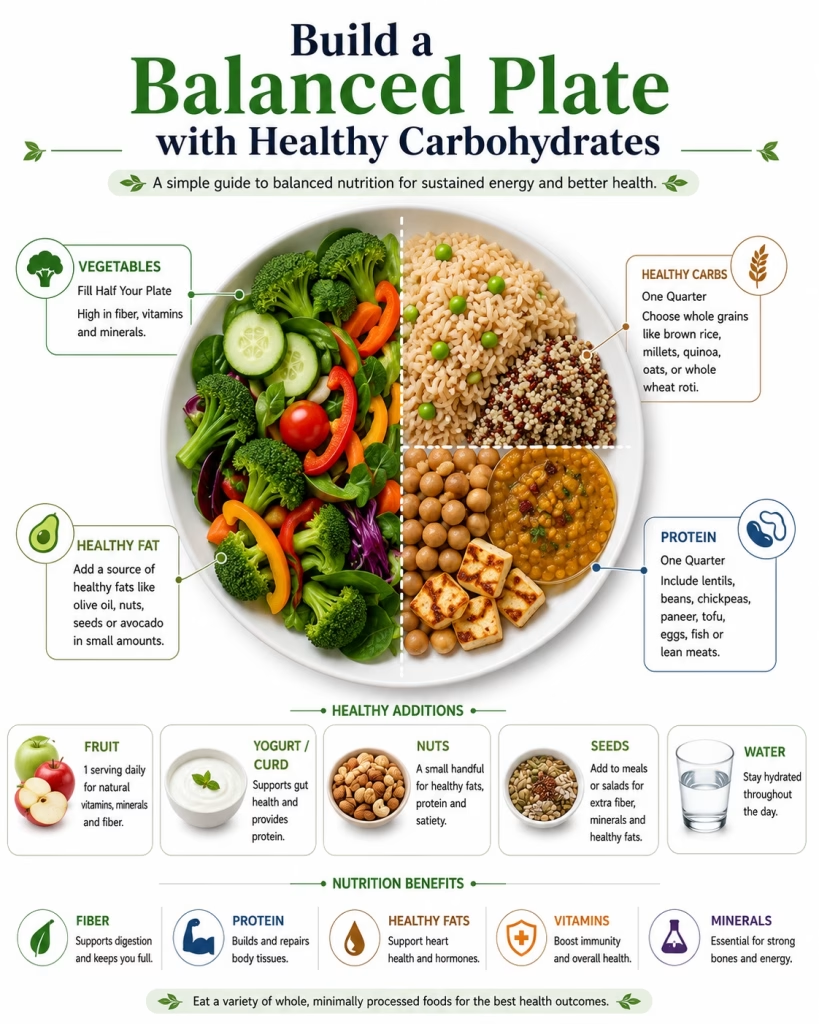
Even good carbs are not a free pass for unlimited portions. A large bowl of brown rice still delivers a meaningful glucose load, just a somewhat gentler one than the same-sized portion of white rice. The traditional Indian thali proportion of roughly a quarter grains, a quarter protein and half vegetables is a genuinely useful default here, keeping portion size in check without requiring you to weigh or count anything.
For people managing diabetes or prediabetes, portion and pairing matter more than strict elimination. Even good carbs, eaten in oversized portions or without any accompanying protein or fiber, can produce a bigger glucose response than expected. Regional variation matters too. A South Indian diet built around rice, idli and dosa batter looks different from a North Indian diet built around wheat roti, and both can be perfectly balanced when portioned sensibly and paired with dal, vegetables and a reasonable amount of fat.
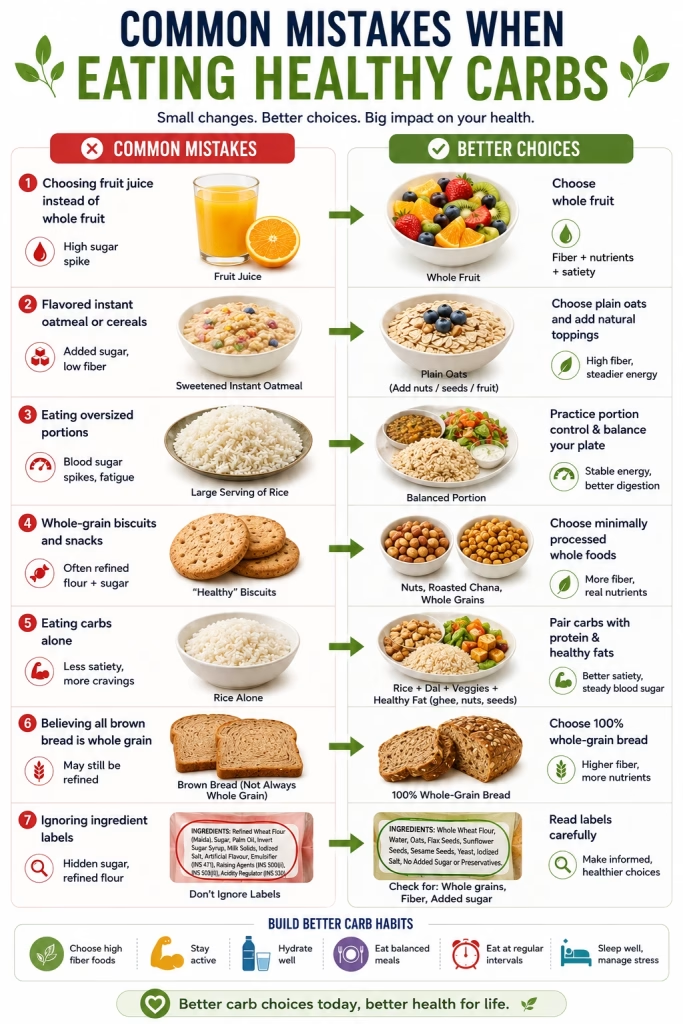
Assuming that “multigrain” or “brown” on a food label automatically means whole grain, when it is frequently a marketing description rather than a nutritional guarantee, is one of the most common traps. Cutting all carbs, including the genuinely good ones, in pursuit of faster weight loss often backfires into fiber and micronutrient deficiency along with unsustainable hunger. And ignoring portion size simply because a food has been labeled “good carb” undermines the point, since even whole grains and legumes still carry meaningful calorie and carbohydrate content.
Expert tip: pairing any carbohydrate, good or bad, with protein or fiber measurably blunts the resulting blood sugar spike. This single habit does more for glucose stability than agonizing over whether a specific carb qualifies as “good” or “bad” in isolation.
Choosing healthy carbohydrates is often simpler than it seems. Start by asking whether the food is close to its natural form. Whole fruits, vegetables, legumes, oats, brown rice, and millets are generally healthier choices because they retain their natural fiber and nutrients. If a food has been heavily refined or contains a long ingredient list, check whether whole grains are listed as the first ingredient, whether it is high in fiber, and whether it contains little or no added sugar. Foods that meet these criteria are usually healthier carbohydrate choices.

On the other hand, products made primarily with refined flour, added sugars, or highly processed ingredients—such as sugary cereals, sweetened beverages, cookies, and many packaged snacks—are best enjoyed occasionally. When in doubt, read the nutrition label and ingredient list, and choose foods that are minimally processed and naturally rich in fiber.
Are complex carbs good for you?
Yes, most complex carbohydrates are healthy, especially when they come from whole, minimally processed foods like oats, brown rice, whole wheat, millets, legumes, vegetables, and fruits. These foods are usually rich in fiber (both soluble and insoluble), essential micronutrients, and beneficial plant compounds like polyphenols, which help provide steady energy by slowing digestion and reducing blood sugar spikes. They also support a healthy gut microbiome by feeding beneficial bacteria through fermentable fibers, which can improve digestion and overall metabolic health. Some whole grains and legumes also contain resistant starch, which acts like fiber and may further improve insulin sensitivity and post-meal blood sugar control. the lesser a food is processed the better in general.
For most people, glycemic load (GL) is more useful than glycemic index (GI) because it looks at both how fast a food raises blood sugar and how much carbohydrate you actually eat in a normal serving. For example, watermelon has a high GI, but its glycemic load is low since a typical portion does not contain a large amount of carbs. Understanding these terms helps people with diabetes build a healthy plate and consciously track how much sugar they have consumed.
Most adults should aim for about 25 to 30 grams of fiber each day. You can get this from foods like whole grains, legumes, fruits, vegetables, nuts, and seeds. Getting enough fiber helps support digestion, keeps you satisfied after meals, and can help keep blood sugar levels more stable.
Neither rice nor roti contains much natural sugar. Both are mainly made up of starch. The healthier option depends on the type and how much you eat. Whole wheat roti usually has more fiber than white rice, while brown or red rice are better alternatives to white rice. Adding vegetables and protein to either one makes the meal more balanced and nutritious.
People with diabetes can still eat carbohydrates, but it helps to choose high-fiber, less processed options like oats, whole grains, legumes, vegetables, and whole fruits. It also helps to combine carbs with protein or healthy fats and to watch portion sizes, as this can reduce blood sugar spikes after meals.
People with diabetes should try to limit refined carbs and foods with added sugar, such as sugary drinks, pastries, candies, white bread, sweetened cereals, and many ultra-processed snacks. Choosing whole grains, legumes, vegetables, and other fiber-rich foods instead is usually a healthier and more balanced approach.
Choose whole, minimally processed carbohydrates, whole grains, millets, legumes, vegetables and whole fruit, as your everyday default, and treat refined, sugary and heavily processed carbs as occasional rather than habitual. Remember that glycemic load, not glycemic index alone, gives you the fuller picture, since portion size changes the real-world impact of a food’s GI score. Pair carbohydrates with protein or fiber to blunt blood sugar spikes, and keep portions sensible even for foods you know are “good.” For a closer look at how this looks specifically within an Indian diet, the ideal ratio of protein, carbs, and fiber is worth reading next, and the full framework for a balanced diet covers how carbs fit into the bigger nutritional picture.
Carbs are not the enemy, and you were never meant to fear rice, roti or a proper Indian sweet on a festival day. Knowing the difference between good and bad carbs just means you get to make that choice on purpose, most days, rather than by accident every day. If you want to see what happens when the “bad carb” side of this equation becomes a daily habit instead of an occasional one, what happens if you eat too many bad carbs lays it out in detail. That is exactly the kind of clarity Wellthify exists to give you, so you can enjoy food without the guesswork.
This article is for general educational purposes and is not a substitute for personalized medical or nutritional advice. Please consult a registered dietitian or your doctor before making significant dietary changes, especially if you have diabetes or another metabolic condition.
Subscribe to get the latest posts sent to your email.
[…] wreaking havoc on millions of Indian bodies every single day. Now it has become more than the Good and Bad carbs cycle and evolved to the refined carbs […]