

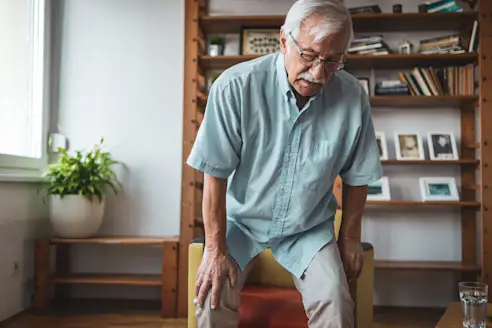

It’s a familiar scene in many Indian homes.
Seventy-year-old Mr. Sharma gets up from his afternoon nap to drink water. Within moments of standing, he feels his head spinning and his vision blurring. He quickly grabs the nearest chair to steady himself. His family assumes it’s weakness or tiredness, and he himself doesn’t think much of it.
But sometimes, these dizzy spells are not just age or fatigue. They could be an early warning sign of a condition called orthostatic hypertension.
How the Body Adjusts When We Stand
Every time we move from lying or sitting to standing, gravity pulls blood down towards the legs and stomach. This means less blood temporarily reaches the brain.
Normally, the body corrects this by:
- Making the heart beat a little faster
- Tightening the blood vessels
- Restoring blood pressure balance
This process is quick and smooth in healthy people. But in some, instead of stabilising, the blood pressure shoots up sharply on standing. This is known as orthostatic hypertension (OHT).
What Exactly Is Orthostatic Hypertension?

Most of us know about low BP (fainting when standing) or high BP (persistent hypertension). Orthostatic hypertension is different.
- While sitting or lying, blood pressure may look normal.
- Within 2–3 minutes of standing, the top reading (systolic BP) jumps by 20 points or more.
For example:
- Sitting BP: 120/80 mmHg
- Standing BP: 145/90 mmHg
This jump is not just a one-off—it’s a consistent reaction whenever the person stands.
Why It Matters

You might wonder, “Isn’t low BP more dangerous? Why worry if it goes up?”
The problem is that repeated spikes in blood pressure silently strain the body:
- The Heart
Sudden pressure surges force the heart to pump harder, raising the risk of heart attacks in the long run. - The Brain
These fluctuations can damage small blood vessels in the brain, increasing chances of stroke and even memory decline with age. - The Kidneys
Already sensitive to BP changes, kidneys can deteriorate faster, especially in those with diabetes. - The Eyes
Blood vessels in the retina may get damaged, leading to vision problems.
The real danger is that this often happens silently—many people live with it for years without knowing.
Why Does It Cause Dizziness?

When BP rises too quickly on standing, the blood flow to the brain doesn’t balance out smoothly. This mismatch creates feelings of:
- Dizziness or light-headedness
- Blurred vision
- Unsteadiness
- Mental fogginess
- Palpitations in some cases
Who Is More at Risk?

Orthostatic hypertension can happen to anyone, but certain groups in India are more vulnerable:
1. Older Adults (above 60 years)
As we age, blood vessels stiffen and the body’s ability to control blood pressure weakens.
2. People with Diabetes
Diabetes damages the nerves that regulate blood pressure. This makes them prone to BP surges after standing.
3. Those Already Living with Hypertension
Even patients on BP medicines may face sudden spikes, complicating their treatment.
4. Kidney Patients
Damaged kidneys struggle to regulate blood pressure properly, making them high-risk.
5. Sedentary Middle-Aged Adults
Indians in their 30s and 40s, especially office workers with long sitting hours, stress, lack of exercise, and high-salt diets, are increasingly reporting BP fluctuations.
Symptoms to Watch Out For

- Frequent dizziness when standing
- Headaches, especially at the back of the head
- Mental fog or difficulty concentrating
- Blurred vision
- Heart palpitations
If these symptoms occur often, they should not be ignored.
How Doctors Diagnose It

The test is straightforward:
- Measure BP while lying down.
- Measure immediately after standing.
- Measure again after 3 minutes of standing.
If the top number (systolic BP) rises by 20 or more, it points to orthostatic hypertension.
In some cases, doctors may suggest 24-hour BP monitoring to track how pressure changes throughout the day.
Can It Be Managed?
Yes—but the key is medical guidance.
Important Disclaimer: Always consult a doctor before starting or changing any treatment. Do not self-medicate.

Lifestyle Steps That Help
- Reduce salt: Limit pickles, papads, and packaged snacks that add extra sodium.
- Stay active: Walking, yoga, and simple stretches improve circulation.
- Get up slowly: Avoid jumping up suddenly from lying or sitting.
- Stay hydrated: Drink enough water, especially in hot weather.
- Maintain healthy weight: Obesity increases BP fluctuations.
- Avoid smoking and excess alcohol: Both weaken blood vessels.
Medical Treatment
Doctors may:
- Adjust hypertension medicines to avoid sharp swings.
- Prescribe drugs that help regulate the nervous system.
- Monitor BP closely in people with diabetes or kidney disease.
But the treatment varies for each individual—only a qualified doctor can decide the right approach.
Why Awareness Is Low in India
In many households, dizziness is brushed aside as weakness, age, or tiredness. Even during routine check-ups, BP is usually measured only in the sitting position. This means orthostatic hypertension goes unnoticed in countless patients. With hypertension and diabetes already affecting millions of Indians, awareness about OHT is essential. Early detection can prevent strokes, kidney disease, and heart problems.

When to Seek Urgent Medical Help
Don’t delay if dizziness on standing comes with:
- Fainting or blackout
- Severe headache
- Chest pain or breathlessness
- Sudden confusion or slurred speech
- Sudden loss of vision
These could signal serious complications.
Final Word
Dizziness when standing may seem harmless, but for some people it’s a red flag for orthostatic hypertension—a hidden risk factor for stroke, kidney damage, and heart disease.
If you or an elderly family member frequently feel light-headed after standing, it’s worth getting checked. A simple BP test in lying and standing positions can reveal a lot.
With medical advice, lifestyle adjustments, and regular monitoring, the risks can be managed. The key is not to ignore the warning signs.

Don’t dismiss the signal. Get it checked, stay safe.
If this was helpful for you or someone you care about, please share it to encourage us and spread awareness. At Wellthify, we bring you clear, actionable insights on lifestyle diseases and how to stay fit and healthy. For more practical tips and guidance, keep reading Wellthify and explore our other articles.


Leave a Reply