

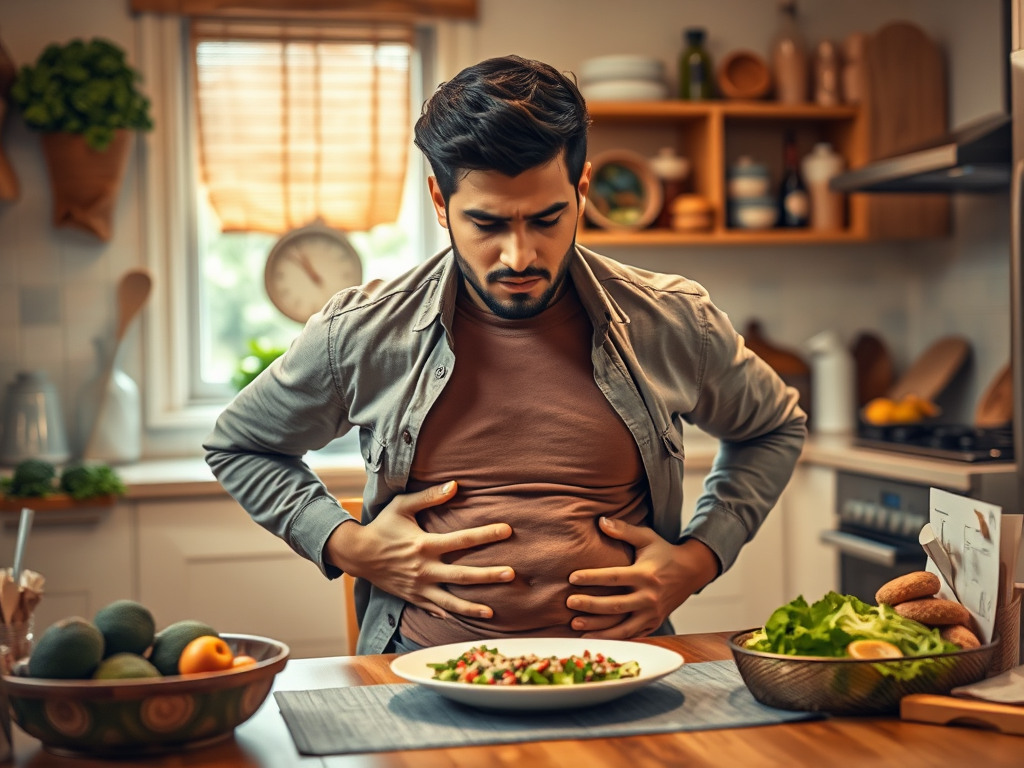
The Strange Case of “Healthy” Eating Gone Wrong
Meet Karthik—31, gym-goer, clean eater, and proud meal prepper. His fridge is stacked with broccoli, sprouts, oats, and raw salads. His friends think he’s got his nutrition sorted.
But every evening, without fail, his stomach swells up like a balloon. Tight jeans become unbearable. He looks 6 months pregnant. And despite hitting 10,000 steps a day—he feels sluggish, foggy, and irritable.

He’s tried gas tablets. Gut cleanses. Swapping atta for millets.
Still… bloat, bloat, bloat.
Sound familiar?
Let’s clear something up first:
Bloating is not the same as gas—and “eating healthy” may actually be the problem.
Gas vs. Bloating: Know the Difference
People use the terms interchangeably, but they’re not the same.
| Symptom | Gas | Bloating |
| What it is | Build-up of air or digestive gases | A feeling of fullness or swelling |
| Feels like | Burps, flatulence, cramps | Tight belly, pressure, distension |
| Comes and goes | Quickly | Can linger for hours |
| Main cause | Swallowed air, fermentation | Food intolerances, poor motility |
You can have gas without bloating—and bloating without much gas.
Bloating is less about what’s coming out… and more about what’s getting stuck.
The Real Culprits Behind That Balloon Belly
Let’s decode the actual (and often surprising) causes—especially common in modern Indian diets.
1. You’re Eating Too Much Fiber—Too Fast
Fiber is great… until it isn’t.
In India’s “healthy eating” wave, many people go from a roti-sabzi diet to:
- Raw oats
- Chia pudding
- Multigrain breads
- Raw salads
- Sprouts daily
- Overnight millets

Result? Fiber overload.
Your gut needs time (and the right bacteria) to handle high-fiber foods. Without that, fiber just ferments.
2. You’re Not Chewing Properly
This sounds basic. It’s not. Digestion begins in the mouth. But modern life = distracted meals = poor chewing. Undigested food reaches the intestines → bacteria ferment it → boom, bloating.
Try: Chew every bite 20–30 times. Literally. Especially for dals, salads, and grains.
3. You Might Be Sensitive to “Healthy” Foods
We often blame chole bhature for bloating. But sometimes it’s:
- Curd
- Milk in tea
- Onions + garlic
- Gluten in atta
- Protein powders
- Besan
These aren’t “bad” foods—they’re just triggering for some guts.
Common intolerances in Indian adults:

- Lactose – milk, dahi, paneer
- FODMAPs – onion, garlic, legumes
- Gluten – atta, bread, semolina
- Soy – mock meats, packaged snacks
- Artificial sweeteners – sugar-free gum, flavored water
If you’re bloated after even simple meals, test by removing 1 group at a time for 5–7 days.
4. You’re Eating Too Fast (Even if It’s Healthy)
Rushing through meals creates:
- Poor saliva production
- Swallowed air
- Stress response → poor acid secretion
Even khichdi can cause bloating if eaten in 5 minutes flat, while scrolling.
Give yourself 15–20 minutes for meals. No screens. No calls.
5. Gut Fermentation Gone Wild
This is where bloating becomes systemic.
When undigested food reaches the colon, gut bacteria feast → they produce gas as a byproduct.
If your gut bacteria are imbalanced (from antibiotics, stress, or junk food history), even small meals = gas factory in severe cases.
This is called SIBO: Small Intestinal Bacterial Overgrowth
You’ll notice:
- Bloating within 30 mins of eating
- Extreme gas after carbs or sweets
- Constant fatigue + brain fog
The Indian Diet Bloating Triggers You Didn’t Expect
| Food/Drink | Why It Bloats You |
| Raw onion in salad | High in fructans (a FODMAP) |
| Tea with milk | Common lactose sensitivity, esp. if on empty stomach |
| Sprouts | Difficult to digest when raw |
| Poha with peanuts | High-fat + carb combo delays stomach emptying |
| Multigrain roti | More fiber, harder on sensitive guts |
| Green smoothie | Too cold + fiber-heavy = poor digestion for many |
How to De-Bloat Naturally (Without Medication or Cleanses)
No gimmicks. Just rhythm, real food, and right timing.
1. Start Your Day Gently
- Warm jeera-ajwain water (½ tsp each in 1 glass water)
- 1 date + 4 soaked almonds
- Avoid raw fruit or smoothies on empty stomach if you notice a pattern of discomfort

2. Build Bloat-Free Meals
Follow the “Warm, Simple, Soft” Rule:

- Khichdi with ghee + grated ginger
- Moong dal + jeera rice + sautéed lauki or palak
- Idli + coconut chutney (no sambhar if you’re sensitive to tamarind)
Add fennel (saunf), cumin, and hing to cooking. Avoid excessive raw salads, sprouts, and chaats while resetting.
3. Activate Your Vagus Nerve Before Meals
This stimulates gut movement and acid secretion.
Try:
- 3 deep belly breaths
- Humming or chanting “OM” for 30 seconds
- Splashing cold water on face
Yes, it sounds “woo-woo”—but it works physiologically.
4. Move After Eating (The Right Way)
- Don’t lie down
- Don’t do crunches
- Just walk slowly for 10 minutes or
- Sit in Vajrasana for 5–10 minutes

This encourages food to move forward—not sit and ferment.
5. End Your Meal With a Digestive Ritual
- ½ tsp saunf (fennel) seeds
- Homemade chaas (diluted dahi + jeera + mint)
- Light masala with ajwain, black salt, lemon juice before lunch
Bloated? Your Questions—Answered Simply
Q. “I’m bloated even with khichdi. Why?”
Check:
- Are you chewing properly?
- Did you add too much raw garlic/onion?
- Are you combining it with dahi or chaas?
Even soft foods can bloat if mixed poorly or eaten too fast.
Q. “Does bloating mean I have gas?”
Not always. You might have slow digestion, poor motility, or food stuck in the stomach. Bloating is a feeling, not just a symptom of gas.
Q. “Is curd good or bad for bloating?”
Depends. If you’re lactose-intolerant, curd bloats. If not, diluted curd (chaas) post-meal can help digestion.
Q. “Are probiotics the solution?”
Not always. They can help in specific cases—but adding them blindly may worsen symptoms. First, fix chewing, meal timing, and fiber intake.
Conclusion: Bloating Isn’t a Curse—It’s a Clue
Your body isn’t bloated to annoy you—it’s trying to tell you something.
Sometimes that message is:
- “Slow down”
- “Chew better”
- “Respect the rhythm”
- “Stop calling everything ‘healthy’ just because Instagram said so”
Bloating isn’t solved with gas tablets or green smoothies.
It’s solved by listening to your gut, literally and emotionally.
Your De-Bloat Daily Checklist
- Chewed every bite 20+ times
- No raw salads or sprouts today
- Drank jeera-ajwain water before meals
- Sat in Vajrasana or walked after meals
- Didn’t eat distracted or on-screen
You don’t need a new diet. You need to trust your body—and give it space to heal.

Leave a Reply