

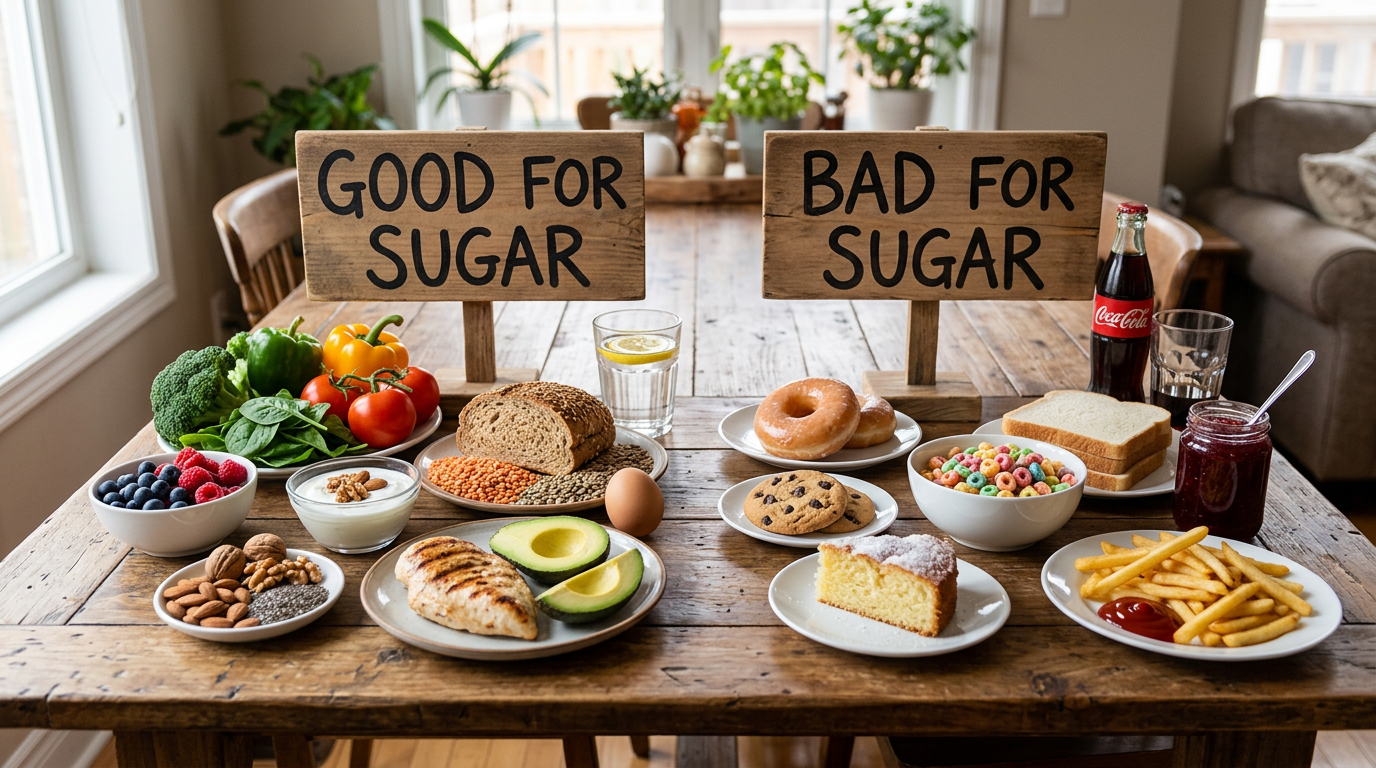

Managing diabetes through diet can feel overwhelming — every meal becomes a question, and well-meaning advice often contradicts itself. You hear that fruit is too sugary, then that fruit is fine. That bread is off-limits, then that some bread is okay. If you have been searching for a clear, research-backed guide to foods good for diabetics, this is it. This article does not deal in scare tactics or rigid rules. Instead, it walks through 60 common foods with honest GI and GL values, plain-language verdicts, and practical tips grounded in evidence.
What decides if a food is good for diabetes?
Whether you were recently diagnosed with Type 2 diabetes, have been managing it for years, or are supporting someone you love, understanding how food affects blood glucose is one of the most powerful tools you have. This guide focuses primarily on Type 2 diabetes but is equally relevant to Type 1 management — because the fundamentals of how carbohydrates affect blood sugar are the same regardless of type. Every food here has been researched against established glycaemic databases and peer-reviewed literature.
How to Think About Food and Diabetes
GI vs. GL — Why Glycaemic Load Matters More
The Glycaemic Index (GI) ranks how fast a food raises blood glucose on a scale of 0–100, using pure glucose as the reference point (GI = 100). Low GI is 55 or below, medium GI is 56–69, and high GI is 70 or above.
Here is the catch: GI is measured in controlled lab conditions where participants eat enough of a food to consume exactly 50 g of carbohydrate. In real life, you eat a portion — and portions vary enormously. A small handful of watermelon chunks is very different from eating a whole wedge.
That is where Glycaemic Load (GL) comes in. GL accounts for both GI and how many carbohydrates are actually in a realistic serving:
GL = (GI × grams of carbohydrate per serving) ÷ 100
- Low GL: 10 or less
- Medium GL: 11–19
- High GL: 20 or more
Watermelon is the classic example of why this matters. Its GI is high (around 72–80 depending on the source), which sounds alarming. But a standard serving (about 120 g) contains only 6 g of carbohydrate, giving a GL of just 4–5 — genuinely low. The food passes through your blood system with a much smaller spike than the GI alone suggests. Read our previous article to understand GI & GL and why they matter in depth.
Practical takeaway: Use GI as a rough quality indicator, but use GL to judge the real-world impact. And remember that preparation method, portion size, food combinations, and individual metabolism all influence how your blood sugar actually responds.
TL;DR: Want the at-a-glance table? Jump to the 60-Food Reference Table.
The 10 Most-Asked Foods — Detailed Breakdown
Bananas
GI: 30–62 (unripe ~30; ripe ~51–62; very ripe up to 74)
GL per typical serving: 11–16 (medium banana, ~120 g)
Key nutrients (medium banana): ~27 g carbs, ~3 g fibre, 1.3 g protein, potassium, vitamin B6
Why ripeness changes everything: An unripe green banana is dominated by resistant starch — a type of carbohydrate that resists digestion and behaves more like fibre than sugar. As the banana ripens, those resistant starches convert into free sugars (glucose, fructose, sucrose), pushing the GI from around 30 all the way to 62 or higher for an overripe, spotted fruit. Research published in the European Journal of Clinical Nutrition (and replicated in a 2025 study in Food Chemistry: Molecular Sciences) confirms that the glycaemic response to under-ripe and over-ripe bananas differs significantly.
Verdict: Eat with Caution
A small, firm, barely-ripe banana (roughly half a banana for most people with diabetes) is a reasonable choice. The fibre content slows digestion and the resistant starch in less-ripe bananas is actively beneficial for gut health and blood sugar regulation. The problem is that most people wait until bananas are sweet and soft before eating them — at which point the GL is genuinely moderate to high. Pairing with protein (Greek yoghurt, a few almonds) helps flatten the spike.
Practical tip: Choose bananas that are just turning yellow, still slightly firm. Eat no more than half to one small banana at a time. Avoid very ripe, brown-spotted bananas if blood sugar control is your primary concern.
Honey
GI: 45–58 (varies by honey type; raw honey tends lower; blended/filtered honey higher)
GL per serving: ~11 per tablespoon (21 g)
Key nutrients (1 tbsp): ~17 g carbs, ~17 g sugar, trace minerals, enzymes, small amounts of antioxidants
Honey vs. sugar — the nuanced truth: Honey has a somewhat lower GI than white table sugar (sucrose, GI ~65) because its fructose content (around 40%) is metabolised more slowly than glucose. This gives it a gentler initial blood sugar curve compared with pure glucose or sucrose. Some small studies have found honey produces a lower postprandial (after-meal) glucose spike than equal amounts of sucrose. There are also studies in BMC Complementary Medicine and Therapies suggesting raw honey may have modest anti-inflammatory benefits for people with Type 2 diabetes.
However — and this is important — honey is still predominantly sugar. One tablespoon contains 17 g of carbohydrate. Blood glucose studies show honey can raise glucose levels by 30–60% within an hour of consumption. The practical difference between honey and sugar for most people with diabetes is small.
Verdict: Limit
Honey is not a free pass. If you prefer honey to sugar and use it sparingly (a teaspoon in tea, a drizzle on porridge), the marginal GI advantage may be meaningful. But treating honey as a “healthy” sugar substitute and using generous amounts will spike blood sugar just as effectively as white sugar. If you do use honey, raw, unprocessed varieties are preferable to filtered commercial honey.
Practical tip: Keep to no more than 1 teaspoon (7 g) at a time. Count it as part of your carbohydrate budget for that meal. Do not use honey as a substitute for prescribed diabetes medication or insulin.
Sourdough Bread
GI: ~48–54 (authentic long-ferment sourdough; compared to ~71–75 for white bread)
GL per serving: ~8–10 (one medium slice, ~40 g)
Key nutrients (1 slice): ~20–22 g carbs, ~1–2 g fibre, ~4–5 g protein
Why fermentation lowers GI: Authentic sourdough is made with a live starter culture of wild yeast and lactic acid bacteria, fermented over 12–48 hours. During this process, the bacteria produce organic acids — particularly lactic acid — that alter the starch structure. Rapidly digestible starch decreases while resistant starch increases. The result is slower carbohydrate absorption and a meaningfully lower GI than industrially produced bread. A 2022 meta-analysis of 18 clinical trials published in Nutrients found sourdough produced measurably lower postprandial glucose compared to conventionally leavened bread.
The catch: Not all bread labelled “sourdough” is authentic. Many supermarket sourdoughs are made with added yeast and flavouring agents, with no real fermentation. These will have a GI closer to standard white bread. Authentic sourdough should have minimal ingredients: flour, water, salt, starter.
Verdict: Good (in moderation, if authentic)
For people with diabetes who want to include bread, authentic sourdough is among the better choices. It is not a low-carb food — one slice still has around 20 g of carbohydrate — but its slower digestion and lower GI make it significantly better than standard white or even many “whole wheat” breads. Pair with protein (eggs, smoked salmon) or healthy fat (avocado) to further slow absorption.
Practical tip: Check the ingredients label. If it lists “yeast” alongside “sourdough starter”, the fermentation benefit is likely minimal. Opt for bakery sourdough from a reputable source, or bake your own. Limit to 1–2 slices per meal.
Popcorn (Air-Popped)
GI: ~55 (air-popped, plain)
GL per serving: ~6 (3 cups air-popped, ~28 g)
Key nutrients (3 cups air-popped): ~19 g carbs, ~3.5 g fibre, ~3 g protein, minimal fat
Why air-popped popcorn is a surprisingly smart snack: Popcorn is a whole grain. It is high in fibre relative to its carbohydrate content, and a generous-feeling serving (3 cups) has a glycaemic load of only 6 — solidly low. The fibre slows digestion and contributes to satiety. As a snack alternative to crisps, crackers, or pretzels, plain popcorn compares very favourably.
The preparation caveat: The key word is air-popped. Microwave popcorn with butter flavouring, movie-theatre popcorn swimming in oil, or kettle corn with added sugar all change the nutritional profile significantly. Caramel popcorn has a completely different GL and is not comparable.
Verdict: Good (air-popped, plain)
Air-popped popcorn is one of the better snack options for people with diabetes. The GL per serving is low, the fibre content is notable, and the portion-to-satisfaction ratio is excellent — 3 cups is a substantial snack. The limit is preparation: buy plain kernels and air-pop them at home where possible.
Practical tip: Season plain popcorn with herbs, nutritional yeast, or a small amount of olive oil and sea salt rather than butter or sweet toppings. A portion of 3 cups (roughly 28 g of popcorn kernels popped) keeps GL comfortably low.
Apples
GI: ~28–44 (average ~36 across varieties)
GL per serving: ~5–6 (one medium apple, ~182 g)
Key nutrients (medium apple with skin): ~25 g carbs, ~4.4 g fibre (including ~1.5 g pectin), ~0.5 g protein, vitamin C, polyphenols
The role of pectin: Apples are one of the most diabetes-friendly fruits available. Their GI is low (around 36 on average), but the real story is in the fibre. Apples contain about 4.4 g of fibre per medium fruit, with roughly a third of that being pectin — a soluble fibre that forms a gel in the digestive tract, slowing carbohydrate absorption and moderating blood glucose rises. The apple skin is where most of the fibre and polyphenols live; always eat the skin.
A 2013 BMJ study following more than 187,000 participants found that eating whole apples was associated with a 7% lower risk of developing Type 2 diabetes. Apple juice, by contrast, removes virtually all fibre and pectin, dramatically raising the GL. Juice should be avoided by people managing blood glucose.
Verdict: Good
Whole apples (with skin) are an excellent choice for people with diabetes. The combination of low GI, substantial fibre, and polyphenols makes them genuinely protective. The key distinction is whole fruit vs. juice — a glass of apple juice can have 24–28 g of rapid carbohydrate with almost no fibre.
Practical tip: Eat the skin. Pair apple slices with a tablespoon of almond butter or a small portion of cheese to further slow glucose absorption. Avoid apple juice, dried apple, and applesauce with added sugar.
Sweet Potatoes
GI: 44–63 (boiled ~44–54; baked ~61–70; depends heavily on cooking method)
GL per serving: ~11–17 (1/2 cup cooked, ~100 g)
Key nutrients (1/2 cup boiled): ~20 g carbs, ~3 g fibre, ~2 g protein, beta-carotene, potassium, vitamin C
Cooking method is everything: Sweet potatoes have a significantly more complex GI story than most foods. Boiled sweet potato has a GI of around 44–54 — genuinely lower than most preparations of white potato (boiled white potato ~82). But baked sweet potato reaches a GI of 61–70, and the gap between sweet and white potato largely disappears when both are baked (both can reach ~88 baked). Longer boiling and then cooling further reduces GI by increasing resistant starch.
The advantage of sweet potato over white potato goes beyond GI: sweet potatoes contain significantly more beta-carotene, vitamin C, and fibre than white potatoes, making them nutritionally superior even when GI values are similar.
Verdict: Eat with Caution
Sweet potatoes can absolutely be part of a diabetes-friendly diet, but they are not a low-GL food in typical servings — a half-cup serving has a GL of around 11–17 depending on preparation. Boiling (rather than baking or roasting) and sticking to a half-cup portion keeps the impact manageable. They are a better nutritional choice than white potatoes in most scenarios.
Practical tip: Boil sweet potatoes rather than baking them. Let them cool for 15–20 minutes before eating — cooling increases resistant starch. Avoid mashed sweet potato with added butter and sugar. Pair with lean protein and non-starchy vegetables to balance the plate.
Peanut Butter
GI: ~14
GL per serving: ~1–2 (2 tablespoons, ~32 g)
Key nutrients (2 tbsp natural peanut butter): ~7 g carbs, ~2 g fibre, ~8 g protein, ~16 g fat (mostly monounsaturated), magnesium, niacin
Why peanut butter is one of the better diabetes-friendly foods: Peanut butter has a remarkably low GI (approximately 14) because it is predominantly fat and protein, with very little carbohydrate. Fat and protein both slow gastric emptying, meaning food leaves the stomach more slowly and blood glucose rises more gradually. A 2018 pilot study in the Journal of the Academy of Nutrition and Dietetics found that adding 32 g of peanut butter to a high-GI meal significantly attenuated the blood glucose spike. The Peanut Institute reports consistent findings: peanuts and peanut butter have a low GI and GL and support blood sugar stabilisation.
The added-sugar problem: Many commercial peanut butters contain added sugars, palm oil, and excessive salt. These additions may be modest in calorie terms but they do affect blood sugar — especially “honey roasted” or “crunchy and sweet” varieties. Natural peanut butter (ingredients: peanuts, salt — nothing else) is the right choice.
Verdict: Good (natural varieties)
Peanut butter is an excellent food for people with diabetes. The protein-fat combination actively helps slow the glycaemic impact of other foods eaten in the same meal. It is energy-dense though — 2 tablespoons is 190 calories — so portion awareness matters.
Practical tip: Choose natural peanut butter with no added sugars or hydrogenated oils. Pair a tablespoon with apple slices, add it to a smoothie, or spread it on a slice of sourdough. Do not eat straight from the jar without measuring — calorie density adds up quickly.
Watermelon
GI: 72–80 (widely cited older value); some recent assessments put it at ~50 when tested fresh
GL per serving: 4–5 (1 cup cubed, ~152 g, approximately 11 g carbs)
Key nutrients (1 cup): ~11 g carbs, ~0.6 g fibre, ~0.9 g protein, lycopene, vitamin A, vitamin C, citrulline
The GI vs. GL paradox in action: Watermelon is the textbook example of why GI alone is misleading. Its GI is frequently cited as 72–80 — technically high — but watermelon is 92% water. A realistic serving (about 1 cup or 150 g) contains only 11 g of carbohydrate, yielding a GL of just 4–5. That is genuinely low. The glycaemic impact of a cup of watermelon on blood sugar is less than that of many foods labelled “diabetic friendly.”
Beyond blood sugar, watermelon provides lycopene (a powerful antioxidant), citrulline (which supports blood vessel health), and useful amounts of vitamins A and C — all relevant to the cardiovascular health concerns often associated with diabetes.
Verdict: Eat with Caution (portion is key)
Watermelon in a sensible portion (1 cup, about 150 g) is fine for most people with diabetes. The problem is that watermelon is easy to overeat — people routinely eat several thick wedges, which can push the carbohydrate load to 30–40 g and the GL into moderate territory. The food itself is not the problem; the portion size is.
Practical tip: Portion watermelon into a bowl before eating rather than cutting slices at the table. Stick to 1–1.5 cups. Eat it as part of a mixed meal rather than on an empty stomach to moderate the glucose response.
Lemon and Citrus Fruits
GI: ~20 (lemon); orange ~45; grapefruit ~25; lime ~20
GL per serving: ~1 (juice of one lemon); orange ~5; grapefruit ~3
Key nutrients (1 medium lemon): ~5 g carbs, ~1.6 g fibre, vitamin C (~53 mg), flavonoids (eriocitrin, hesperidin, naringenin), folate
Why citrus is a diabetes superfood: Lemons and limes have some of the lowest GI values of any food — around 20 — and because they are rarely eaten in large quantities, their GL is negligible. But the benefit of citrus goes beyond its low glycaemic impact. The American Diabetes Association lists lemons specifically as a diabetes superfood, primarily for their vitamin C content and flavonoid compounds.
Research published in Frontiers in Pharmacology identified 19 citrus flavonoids with antidiabetic potential. Hesperidin and eriocitrin, found in lemon, have been shown in studies to improve insulin sensitivity and reduce oxidative stress — both of which are relevant to diabetes management. There is also evidence that lemon juice consumed with a high-GI meal may slow starch conversion, slightly reducing the glycaemic impact of the overall meal.
Whole oranges and grapefruit have low GI values (45 and 25 respectively) and are good sources of fibre and vitamin C. The same principle applies as with all fruit: whole fruit is preferable to juice.
Verdict: Good
Citrus fruits — especially lemons and limes — are among the best choices for people with diabetes. The flavonoids offer benefits that extend beyond blood sugar control. Use lemon juice liberally in cooking, on salads, in water, and over fish or grains.
Practical tip: Squeeze lemon juice over starchy foods (rice, pasta, grains) at the table — some research suggests it may modestly lower the glycaemic response of the meal. Eat whole oranges rather than drinking orange juice. Grapefruit can interact with some common medications (including certain statins and blood pressure medications) — check with your pharmacist.
Cherries
GI: ~22 (sour/tart cherries); sweet cherries ~63
GL per serving: ~3–5 (1 cup pitted, ~150 g)
Key nutrients (1 cup fresh sour cherries): ~22 g carbs, ~3 g fibre, ~1.5 g protein, anthocyanins, vitamin C, potassium
Anthocyanins and insulin sensitivity: Cherries — particularly sour/tart varieties — have one of the lowest GI values of any fruit, at approximately 22. A 2017 study noted that dietary anthocyanins found in cherries appear to improve insulin sensitivity by inhibiting carbohydrate digestion in the gut, enhancing glucose metabolism, and reducing vascular oxidative stress. The anthocyanins in cherries also have anti-inflammatory properties that may help reduce some of the systemic inflammation associated with poorly controlled diabetes.
Important distinction by type: Sweet cherries have a considerably higher GI (around 63) than sour/tart cherries. Canned cherries in syrup are a completely different food — a single cup can contain 37 g of carbohydrate including a large amount of added sugar. Fresh or frozen tart cherries are the recommended form.
Verdict: Good (sour/tart varieties, fresh or frozen)
Fresh or frozen tart cherries are an excellent choice — low GI, anti-inflammatory, rich in antioxidants. Sweet cherries are more of a moderate choice, and canned cherries in syrup should be avoided entirely.
Practical tip: Frozen tart cherries are widely available and nutritionally equivalent to fresh. Add them to porridge, Greek yoghurt, or a smoothie. Check labels on any canned or jarred cherries to ensure no added sugar.
The Full Diabetic Food Reference Table (60 Foods)
This table uses established GI values from the International Tables of Glycaemic Index and Glycaemic Load, the University of Sydney GI database, and Harvard Health Publishing. Where sources give slightly different values, a range is shown. GL is calculated for a standard serving size. Foods with negligible carbohydrate (eggs, chicken, fish, most cheeses) have no GI value — they do not raise blood sugar on their own.
GL key: Low = ≤10 | Medium = 11–19 | High = ≥20
GI key: Low = ≤55 | Medium = 56–69 | High = ≥70
| Food | GI | GL (per serving) | Carbs/serving | Fibre | Verdict | Why |
|---|---|---|---|---|---|---|
| BREADS & GRAINS | ||||||
| White bread (1 slice, 30 g) | 71–75 | 10 | 14 g | 0.6 g | Limit | High GI, minimal fibre; rapid glucose spike |
| Whole wheat bread (1 slice, 30 g) | 68–72 | 9 | 13 g | 1.9 g | Eat with Caution | Slightly better than white but still high GI |
| Sourdough bread (1 slice, 40 g) | 48–54 | 8–10 | 20 g | 1–2 g | Good | Fermentation lowers GI; slower digestion |
| White rice (1/2 cup cooked, 90 g) | 64–87 | 20–26 | 33 g | 0.3 g | Limit | High GL even in modest portions |
| Brown rice (1/2 cup cooked, 100 g) | 50–55 | 16 | 32 g | 1.8 g | Eat with Caution | Lower GI than white; still moderate GL |
| Oats/rolled oats (1/2 cup dry, 40 g) | 50–55 | 13 | 27 g | 4 g | Good | Beta-glucan fibre slows digestion; lowers LDL |
| Instant oatmeal (1/2 cup, 40 g) | 66–79 | 17–20 | 26 g | 1.5 g | Eat with Caution | Processing removes fibre benefit; higher GI |
| Quinoa (1/2 cup cooked, 93 g) | 53 | 13 | 20 g | 2.6 g | Eat with Caution | Complete protein; medium GL; better than rice |
| Pasta/spaghetti (1 cup cooked, 140 g) | 38–50 | 18–21 | 43 g | 2.5 g | Eat with Caution | Lower GI than expected; still significant carbs |
| Whole wheat pasta (1 cup cooked) | 37–40 | 16–18 | 40 g | 4 g | Eat with Caution | Fibre reduces spike; watch portion size |
| Sweet corn (1/2 cup, 82 g) | 52–60 | 9–11 | 20 g | 2 g | Eat with Caution | Whole corn is moderate GI; canned in brine is fine |
| FRUITS | ||||||
| Apple, medium (with skin, 182 g) | 28–44 | 5–6 | 25 g | 4.4 g | Good | Low GI, pectin fibre; eat whole not juiced |
| Banana, medium, ripe (120 g) | 51–62 | 11–16 | 27 g | 3 g | Eat with Caution | Ripeness matters; smaller/firmer = lower GI |
| Banana, unripe/green (120 g) | 30–43 | 8–12 | 27 g | 3 g | Good | Resistant starch dominates; less glucose spike |
| Cherries, tart/sour (1 cup, 150 g) | 22 | 3–5 | 22 g | 3 g | Good | Very low GI; anthocyanins support insulin sensitivity |
| Cherries, sweet (1 cup, 150 g) | 63 | 9–10 | 22 g | 3 g | Eat with Caution | Higher GI than sour; still moderate GL |
| Strawberries (1 cup, 152 g) | 40 | 4 | 11 g | 3 g | Good | Low GI; high vitamin C; anti-inflammatory |
| Blueberries (1 cup, 148 g) | 40–53 | 6–9 | 21 g | 3.6 g | Good | Anthocyanins; low–medium GL per cup |
| Raspberries (1 cup, 123 g) | 32 | 3 | 14 g | 8 g | Good | Very high fibre to carb ratio; excellent choice |
| Orange, navel, medium (131 g) | 40–45 | 5 | 15 g | 3.1 g | Good | Low GI; vitamin C; eat whole not juiced |
| Grapefruit (1/2 medium, 123 g) | 25 | 3 | 13 g | 2 g | Good | Very low GI; check medication interactions |
| Lemon/lime (juice of 1) | ~20 | 1 | 5 g | 0.3 g | Good | Near-zero GL; flavonoids improve insulin sensitivity |
| Mango (1/2 cup sliced, 82 g) | 48–56 | 8 | 12 g | 1.3 g | Eat with Caution | Medium GI; reasonable GL in small portions |
| Grapes (1/2 cup, 80 g) | 43–59 | 8–9 | 14 g | 0.7 g | Eat with Caution | Low fibre; easy to overeat; concentrated sugar |
| Pineapple (1/2 cup, 82 g) | 51–66 | 8–9 | 11 g | 1.2 g | Eat with Caution | Medium-high GI; modest GL in small serving |
| Watermelon (1 cup, 152 g) | 72–80 | 4–5 | 11 g | 0.6 g | Eat with Caution | High GI but very low GL; easy to overeat |
| VEGETABLES | ||||||
| Broccoli (1 cup, 91 g) | 10–15 | <1 | 6 g | 2.4 g | Good | Extremely low GI; chromium may aid insulin |
| Spinach (1 cup raw, 30 g) | <15 | <1 | 1 g | 0.7 g | Good | Negligible carbs; magnesium; anti-inflammatory |
| Tomatoes (1 medium, 123 g) | 15 | 1 | 5 g | 1.5 g | Good | Very low GI; lycopene; broadly beneficial |
| Carrots (1/2 cup cooked, 78 g) | 33–47 | 3 | 8 g | 2.3 g | Good | Moderate GI but very low GL per serving |
| Sweet potato, boiled (1/2 cup, 100 g) | 44–63 | 11–17 | 20 g | 3 g | Eat with Caution | Better than white potato; watch cooking method |
| White potato, boiled (1 medium, 150 g) | 78–82 | 14–18 | 34 g | 3.8 g | Limit | High GI; cool before eating to increase resistant starch |
| PROTEINS | ||||||
| Eggs (2 large) | N/A (no GI) | 0 | <1 g | 0 g | Good | No carbs; high protein; supports blood sugar control |
| Chicken breast (100 g) | N/A | 0 | 0 g | 0 g | Good | No carbs; lean protein; versatile |
| Salmon (100 g) | N/A | 0 | 0 g | 0 g | Good | Omega-3 fatty acids; anti-inflammatory; heart health |
| Canned tuna in water (100 g) | N/A | 0 | 0 g | 0 g | Good | Lean protein; no carbs; affordable |
| Tofu, firm (1/2 cup, 126 g) | 15 | <1 | 2 g | 0.3 g | Good | Very low GI; plant protein; low carb |
| DAIRY | ||||||
| Greek yoghurt, plain, full-fat (3/4 cup) | 11 | 4 | 9 g | 0 g | Good | Low GI; high protein; probiotics |
| Greek yoghurt, flavoured/sweetened (3/4 cup) | 30–50 | 8–16 | 20–30 g | 0 g | Eat with Caution | Added sugars raise GI significantly; check label |
| Milk, full-fat (1 cup, 244 ml) | 27–41 | 4–5 | 12 g | 0 g | Good | Low GI; protein and fat slow glucose rise |
| Milk, skim (1 cup, 244 ml) | 32 | 4 | 12 g | 0 g | Good | Low GI; less fat but similar GL to full-fat |
| Cheese (hard, 30 g) | N/A | 0 | <1 g | 0 g | Good | Negligible carbs; protein and fat; portion-appropriate |
| LEGUMES | ||||||
| Lentils (1/2 cup cooked, 100 g) | 25–32 | 5–8 | 20 g | 7.9 g | Good | Very low GI; high fibre and protein; excellent choice |
| Chickpeas (1/2 cup cooked, 82 g) | 28–36 | 6–8 | 22 g | 6 g | Good | Low GI; resistant starch; plant protein |
| Black beans (1/2 cup cooked, 86 g) | 30 | 7 | 20 g | 7.5 g | Good | Low GI; high fibre; blood sugar friendly |
| Kidney beans (1/2 cup cooked, 90 g) | 24–34 | 7 | 20 g | 5.7 g | Good | Low GI; protein and fibre combination |
| Edamame (1/2 cup, 75 g) | 18 | 2 | 9 g | 4 g | Good | Very low GI; high protein; plant-based |
| NUTS & SEEDS | ||||||
| Almonds (28 g, ~23 nuts) | 0–15 | <1 | 6 g | 3.5 g | Good | Near-zero GL; healthy fat; reduces glucose spike |
| Walnuts (28 g, ~14 halves) | 4–15 | <1 | 4 g | 2 g | Good | Omega-3s; very low GL; anti-inflammatory |
| Peanut butter, natural (2 tbsp, 32 g) | ~14 | ~1 | 7 g | 2 g | Good | Low GI; slows glucose absorption of co-eaten foods |
| Chia seeds (2 tbsp, 28 g) | ~1 | <1 | 12 g | 10 g | Good | Almost all carbs are fibre; gel slows digestion |
| SNACKS & SWEETS | ||||||
| Air-popped popcorn (3 cups, 28 g) | 55 | 6 | 19 g | 3.5 g | Good | Whole grain; low GL; good fibre-to-carb ratio |
| Dark chocolate 70%+ (30 g) | 23–40 | 3–5 | 13 g | 2–3 g | Eat with Caution | Low GI; flavonoids; still has sugar — limit portions |
| Milk chocolate (30 g) | 43–49 | 8–9 | 18 g | 0.3 g | Limit | Higher sugar; lower beneficial cocoa content |
| Candy/sweets (e.g. jelly beans, 30 g) | 78–80 | 22 | 28 g | 0 g | Limit | Pure sugar; high GI and GL; no nutritional benefit |
| Crackers/rice cakes (2 cakes, 18 g) | 72–82 | 11–14 | 15 g | 0.6 g | Limit | High GI; puffed/refined starch spikes glucose quickly |
| BEVERAGES | ||||||
| Water | N/A | 0 | 0 g | 0 g | Good | Best beverage for blood glucose control |
| Black coffee (unsweetened) | N/A | 0 | 0 g | 0 g | Good | No carbs; moderate intake may improve insulin sensitivity |
| Plain tea (unsweetened) | N/A | 0 | 0 g | 0 g | Good | No carbs; polyphenols may benefit insulin sensitivity |
| Regular cola/soda (355 ml can) | 63–68 | 25–26 | 39 g | 0 g | Limit | High sugar; no nutritional value; rapidly raises glucose |
| Orange juice (1 cup, 240 ml) | 50–52 | 12 | 26 g | 0.5 g | Limit | Strips fibre from whole fruit; significant GL |
| Honey (1 tbsp, 21 g) | 45–58 | 11 | 17 g | 0 g | Limit | Still predominantly sugar; marginal GI benefit vs. sucrose |
How to Use This Information
Build Your Plate Around This Framework
The Diabetes Plate Method (endorsed by the American Diabetes Association) provides the most practical framework for applying GI and GL knowledge:
- Half your plate: non-starchy vegetables — broccoli, spinach, tomatoes, cucumbers, peppers, green beans. These are low GI, high fibre, and nutrient-dense. They fill the plate without significant glycaemic impact.
- A quarter of your plate: lean protein — eggs, chicken, fish, tofu, Greek yoghurt, beans. Protein does not raise blood sugar and actively slows the absorption of carbohydrates eaten alongside it.
- A quarter of your plate: quality carbohydrates — choose low-to-medium GI options: legumes, whole grains, sourdough bread, sweet potato. This is where GL management matters most.
Practical Strategies for Lower Blood Sugar Response
1. Pair carbs with protein and fat. A banana eaten alone will spike blood sugar faster than a banana eaten with a tablespoon of peanut butter. This is not anecdotal — it is well-documented in the literature. Fat and protein slow gastric emptying and flatten the glucose curve.
2. Eat carbohydrates last in a meal. Research published in Diabetes Care found that eating vegetables and protein before carbohydrates in the same meal significantly reduces postprandial (after meal) glucose and insulin levels — sometimes by 20–30%. The order in which you eat food at a meal matters.
3. Choose cooking methods that lower GI. Boil rather than bake starchy vegetables. Cook pasta al dente — it has a lower GI than fully cooked pasta. Let cooked rice, potatoes, or pasta cool before eating, as cooling increases resistant starch.
4. Fibre is your ally. Every gram of fibre slows digestion. Build meals around high-fibre foods: legumes (7–10 g fibre per 1/2 cup), raspberries (8 g per cup), chia seeds (10 g per 2 tbsp), oats (4 g per serving). High-fibre diets are consistently associated with better HbA1c levels.
5. Do not fear all carbohydrates — improve their quality. Swapping high-GI processed carbohydrates for low-GI whole food carbohydrates — without changing total carb intake — produces measurable improvements in blood sugar control. The goal is not to eliminate carbohydrates but to choose better ones.
6. Watch portions, not just food types. Watermelon is a perfect example: a high-GI food that is genuinely fine in a 1-cup serving. Many foods become problematic only when portion sizes become excessive. Use a bowl or plate rather than eating from the package.
Frequently Asked Questions
Are bananas bad for diabetics?
Not categorically, no. A small, firm (less-ripe) banana has a GI of around 30–43 and a GL in the low-medium range. The fibre and resistant starch in less-ripe bananas are actively beneficial. The concern is with very ripe bananas eaten in large amounts. A half to one small banana, paired with protein, is a reasonable choice for most people with diabetes. Always check with your own healthcare team and monitor your individual response.
Can diabetics eat fruit at all?
Yes. Fruit contains fibre, vitamins, minerals, and polyphenols that have protective effects. Whole fruit (not juice) is associated with lower rates of Type 2 diabetes in large epidemiological studies. The key is choosing lower-GI fruits (berries, apples, cherries, citrus), controlling portions, and eating fruit as part of a balanced meal rather than in isolation.
Is honey better than sugar for diabetics?
Marginally, at most. Honey has a GI of 45–58 compared to white sugar’s GI of ~65, because of its higher fructose content. However, the practical difference in blood sugar response is modest. Both are primarily simple sugars. The ADA recommends limiting honey just as you would any added sugar. Honey is not a safe alternative in larger quantities.
What is the best bread for diabetics?
Authentic long-fermented sourdough (GI ~48–54) is among the best options. 100% rye bread and dense whole-grain breads with intact grain are also good choices. Avoid standard white bread (GI 71–75) and most supermarket “whole wheat” breads, which often have GI values close to white bread despite their appearance. Always check whether sourdough is genuine (flour, water, salt, starter only) or a marketing term on commercially leavened bread.
Do I need to avoid all high-GI foods?
No. GI is a useful guide but not a rule. Watermelon has a high GI but a low GL per serving and is nutritionally valuable. The overall pattern of your diet matters far more than any individual food. Focus on the total GL of your meals, the balance of macronutrients, portion sizes, and dietary fibre — not on a rigid list of forbidden foods.
Are sweet potatoes actually better than white potatoes for diabetics?
It depends on preparation. Boiled sweet potato (GI ~44–54) is substantially better than boiled white potato (GI ~78–82). But baked sweet potato (GI up to 70) is not dramatically different from baked white potato. If you love potatoes, boil them, cool them before eating, and pair them with protein and plenty of non-starchy vegetables.
What about artificial sweeteners and diet drinks?
This article focuses on whole foods rather than artificial sweeteners, as evidence on the latter remains mixed. Diet sodas contain no sugar and technically have a GL of zero, but some research suggests they may affect gut microbiome composition and appetite signalling in ways that are not clearly beneficial for metabolic health. Plain water, unsweetened tea, and black coffee remain the best beverage choices.
Key Terms
Glycaemic Index (GI)
A scale from 0–100 that ranks how quickly a carbohydrate-containing food raises blood glucose, relative to pure glucose (GI = 100). Low GI: ≤55. Medium GI: 56–69. High GI: ≥70. Measured under controlled conditions using a 50 g carbohydrate portion.
Glycaemic Load (GL)
A more practical measure that accounts for both the GI of a food and the amount of carbohydrate in a realistic serving. Calculated as (GI × grams of carbs per serving) ÷ 100. Low GL: ≤10. Medium GL: 11–19. High GL: ≥20. A food can have a high GI but a low GL if the serving size is small (e.g. watermelon).
Insulin Resistance
A condition in which cells in muscles, fat, and the liver do not respond effectively to insulin, meaning more insulin is needed to move glucose from the bloodstream into cells. Insulin resistance is the hallmark of Type 2 diabetes and prediabetes. Diet, physical activity, sleep, and body composition all influence insulin sensitivity.
HbA1c (Haemoglobin A1c)
A blood test that measures average blood glucose levels over the previous 2–3 months by assessing the proportion of haemoglobin with glucose attached. A normal HbA1c is below 5.7%; prediabetes is 5.7–6.4%; diabetes is 6.5% or above. It is the key long-term indicator of diabetes management. Dietary changes, including shifting toward lower-GI foods, can produce measurable improvements in HbA1c over 3–6 months.
Net Carbs
A term used particularly in low-carbohydrate communities, calculated as total carbohydrates minus dietary fibre (and sometimes sugar alcohols). The rationale is that fibre is not digested and does not raise blood glucose, so only “net” (digestible) carbs count. This concept is not universally standardised or recognised by all diabetes organisations, but it is a useful rough guide. For whole foods high in fibre, net carbs are meaningfully lower than total carbs.
Portion Control
The practice of eating a defined, measured quantity of food rather than an open-ended amount. For diabetes management, portion control is particularly important for carbohydrate-containing foods because GL scales directly with serving size. A food with a medium GL per standard serving can become a high-GL food if you eat twice the serving. Using measuring cups, a food scale, or visual reference guides (a portion of cooked rice is roughly the size of a tennis ball; a portion of protein is about the size of a deck of cards) helps put GI knowledge into practice.
When to See a Healthcare Professional
This guide is educational and should not replace personalised medical advice. If you have diabetes, please work with a registered dietitian or diabetes specialist to build a meal plan specific to your medication, lifestyle, and blood sugar targets.
You should seek professional guidance if:
– You are newly diagnosed and unsure where to start
– Your HbA1c is not within your target range despite dietary efforts
– You are pregnant and managing gestational diabetes (dietary requirements differ significantly)
– You are taking insulin and want to adjust carbohydrate counting
– You have been advised by a doctor to lose weight as part of diabetes management
– You notice blood sugar readings that are consistently higher or lower than expected after meals
The NHS Diabetes Prevention Programme (in the UK) and the American Diabetes Association’s Diabetes Food Hub are excellent free resources. Continuous glucose monitors (CGMs), increasingly available to people with diabetes, can help you understand your personal response to specific foods — because individual variation is real and significant.
Closing Note
There is no single “perfect” diet for diabetes — and that is actually good news. It means flexibility is possible, and that the foods you already love likely have a place in a well-managed eating pattern. The goal is not to build a life of restriction, but to build a life of informed choices: knowing that a half-banana paired with Greek yoghurt is a very different thing physiologically from a large over-ripe banana eaten alone; knowing that authentic sourdough and lentil soup are genuinely good options, not compromises.
If you found this guide useful, Wellthify has companion articles on building low-GL meal plans, managing blood sugar through physical activity, and understanding the role of sleep in insulin resistance. Diabetes management is a whole-life endeavour — and you do not have to figure it out alone.
References
- International Tables of Glycemic Index and Glycemic Load Values: 2008 — PMC/NCBI
- Harvard Health: Glycemic index for 60+ foods
- Harvard Health: The lowdown on glycemic index and glycemic load
- Glycaemic Index of Bananas — Glycemic Index Foundation (University of Sydney)
- PubMed: Influence of ripeness of banana on blood glucose and insulin response in Type 2 diabetic subjects
- ScienceDirect: Effect of fruit ripening stage on glycemic index, glycemic load and antioxidant properties
- PMC: Honey and Diabetes: The Importance of Natural Simple Sugars
- PMC: Effect of Natural Honey on Glycemic Control in Type 2 Diabetes: Randomized Controlled Crossover Trial
- PubMed: Consumption of sourdough bread and postprandial glucose changes
- PMC: Effect of Different Fermentation Conditions on Estimated Glycemic Index and Starch Digestibility of Sourdough Bread
- Frontiers in Nutrition: Does sourdough bread provide clinically relevant health benefits?
- Medical News Today: Diabetes and popcorn: Glycemic index, shopping tips, and nutrition
- Glycaemic Index of Sweet Potato — Glycemic Index Foundation (University of Sydney)
- USDA ARS: Glycemic Index of Sweet Potato as Affected by Cooking Method
- PubMed: The Effect of Added Peanut Butter on the Glycemic Response to a High-Glycemic Index Meal
- PMC: Peanuts and Tree Nuts as a Dietary Strategy for Improving Type 2 Diabetes Risk Factors
- Glycemic Index Foundation: WATERMELON
- PMC: Watermelon lycopene and allied health claims — review of evidence
- PMC: Citrus Flavonoids as Promising Phytochemicals Targeting Diabetes
- PMC: Lemon Polyphenols Suppress Diet-induced Obesity by Up-Regulation of mRNA Levels of the Enzymes Involved in β-Oxidation in Mouse White Adipose Tissue
- PMC: Tart Cherry Anthocyanins Inhibit Tumor Development in Apc Min Mice and Reduce Proliferation of Human Colon Cancer Cells — and anti-inflammatory/insulin effects
- PMC: Apple Preload Halved the Postprandial Glycaemic Response of Rice Meal in Healthy Subjects
- Linus Pauling Institute — Oregon State University: Glycemic Index and Glycemic Load
- CDC: Diabetes Meal Planning
- American Diabetes Association: What is the Diabetes Plate?
- Mayo Clinic: Low Glycemic Index Diet
- Diabetes UK: Glycaemic Index and Diabetes
- PMC: Effects of Honey Compared with Sucrose and a Sugar-Free Product on Cardiometabolic Risk Factors in Overweight Adults
- University of Sydney GI Database — searchable glycaemic index values for 4,000+ foods
This article was produced by the Wellthify editorial team. Wellthify is committed to evidence-based health content reviewed against peer-reviewed literature and established clinical guidelines. We update our articles when new research warrants revision.
Medical Disclaimer: This article is for informational and educational purposes only. It does not constitute medical advice, diagnosis, or treatment. The glycaemic index and glycaemic load values cited reflect published research but individual responses to food vary significantly. If you have diabetes, prediabetes, or any other medical condition, consult a qualified healthcare professional — including a registered dietitian — before making significant changes to your diet. Never adjust prescribed medication, including insulin doses, based solely on dietary information. In a medical emergency, seek immediate professional help.



Leave a Reply